1890s Maps of Wyoming
Explore 56 historic maps of Wyoming from the 1890s. These maps offer a rare glimpse into what life looked like during the 1890s — showing old roads, neighborhoods, homes, and landmarks that have changed or disappeared over time.
Whether you're researching your family's past, planning a metal detecting trip, or studying how Wyoming's landscape evolved across the 1890s, these high-resolution maps are a powerful tool for exploring the history of this region.
- Focus on a specific era: All maps on this page are from the 1890s, giving you a focused view of this time period.
- See what’s changed: Compare century-old streets, trails, and buildings to today's modern landscape using overlays and satellite layers.
- Research with precision: Use these maps for genealogy, historical research, land use analysis, or educational projects.
- View, download, or print: Maps are fully viewable online in high resolution, and can be downloaded or printed for your own records.
Start exploring Wyoming's history through authentic maps from the 1890s. This is your window into the past.
Wyoming maps
- 1891 Map of Livingston
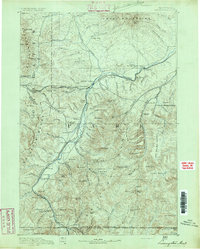 1891 Livingston1891 Print · USGSUpper Yellowstone River country is documented here in the late nineteenth century as the railroad transformed the valley. Genealogists and historians can trace rail-stop towns like Cokedale, the military grounds at Ft. Ellis, and the Old Crow Agency.
 - 1893 Map of Livingston
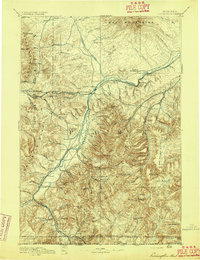 1893 Livingston1893 Print · USGSThe Montana mountain country and the gateway to the national park are captured here in the late nineteenth century. Trace the industrial rail corridor through Livingston to mining sites like Coke and the historic Old Crow Agency.5 unique versions available
 - 1893 Map of Fort Steele
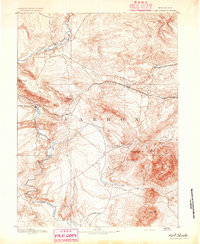 1893 Fort Steele1893 Print · USGSCarbon County in the early 1890s is a rugged landscape dominated by the high-altitude peaks of the Snowy Range and the iron path of the Union Pacific Ry. Genealogists and historians can trace the early rail stops at Hanna, Dana, and Ft Steele alongside the winding course of the North Platte River.4 unique versions available
 - 1893 Map of Ishawooa, 1962 Print
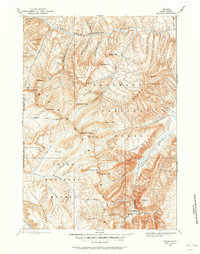 1893 Ishawooa1962 Print · USGSPark County at the end of the nineteenth century remains a wilderness of mining camps and alpine plateaus along the boundary of the nation’s first park. Trace early exploration through the Stinkingwater Mining Region and over high points like Ishawooa Pass and the Thorofare Plateau.
 - 1894 Map of Rosebud
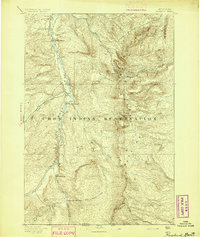 1894 Rosebud1894 Print · USGSThe Big Horn Basin and the Crow Indian Reservation are captured in the late nineteenth century as early cattle outposts began to dot the river valleys. Genealogists and local historians can trace early holdings like Forty Mile Ranch, Hams Ranch, and the Sand Hills Ranch.
 - 1894 Map of St. Xavier
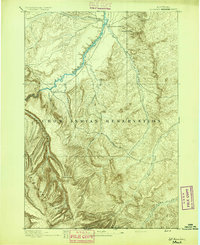 1894 St. Xavier1894 Print · USGSThe Crow Indian Reservation in the 1890s is captured here just as the frontier era was closing. Researchers can trace the path of the Old Bozeman Military Road past St. Xavier Mission and the Site of Old Fort C. F. Smith.
 - 1894 Map of Three Forks
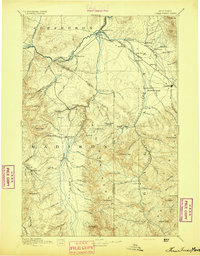 1894 Three Forks1894 Print · USGSSouthwestern Montana thrives along the river forks and rail lines during the mid-1880s. Genealogists and historians can trace early town sites like Pony, Logan, and Salesville while locating river crossings such as Fly's Bridge and Shedds Bridge.
 - 1895 Map of Three Forks
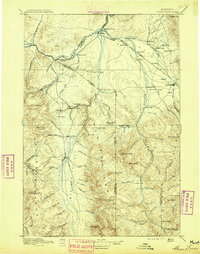 1895 Three Forks1895 Print · USGSSouthern Montana was a landscape of emerging rail towns and gold-country gulches during the mid-1890s. Genealogists and historians can trace the early footprints of Bozeman, locate Guns Ranch, and follow the Northern Pacific Railroad through Three Forks.5 unique versions available
 - 1895 Map of Shoshone
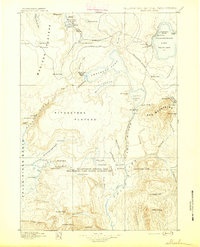 1895 Shoshone1895 Print · USGSYellowstone at the end of the nineteenth century reveals the early footprint of American conservation and tourism. Researchers can trace the original trails and thermal clusters of the Upper Geyser Basin, including the Old Faithful Hotel and Lone Star Geyser.
 - 1895 Map of Ishawooa
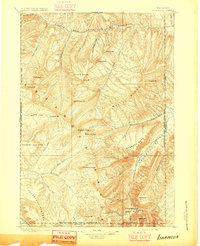 1895 Ishawooa1895 Print · USGSThe Yellowstone backcountry of the 1890s appears as a rugged high-mountain frontier in this early survey of the Shoshone and Stinkingwater drainages. Researchers can trace early high-altitude routes through Ishawooa Pass and explore the historic Stinkingwater Mining Region.
 - 1895 Map of Canyon
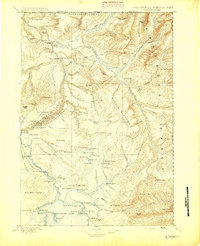 1895 Canyon1895 Print · USGSYellowstone's early park architecture and geothermal wonders are captured here in the late nineteenth century. Trace early routes past the Baronett Bridge, the Hotel on the lake, and the storied settlement at Yanceys.
 - 1895 Map of Lake
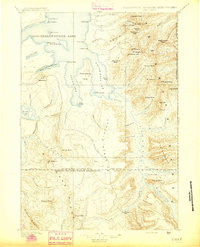 1895 Lake1895 Print · USGSSoutheastern Yellowstone was a wild frontier of high passes and glacial lakes in the 1890s. Trace the complex alpine terrain around Yellowstone Lake, the waters of Heart Lake, and notable peaks like Mt Stevenson or Eagle Peak.
 - 1895 Map of Dayton
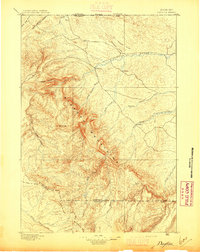 1895 Dayton1895 Print · USGSSheridan County and the Bighorn foothills are captured here in the late nineteenth century as ranching and transit began to define the region. Genealogists and researchers can trace the early road networks connecting Dayton, Ohlman, and the ranching hub at Beckton.
 - 1895 Map of Laramie
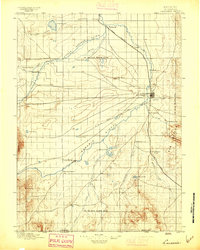 1895 Laramie1895 Print · USGSLaramie and the high plains of Albany County are shown here in the mid-1890s, when the railroad and river systems defined the frontier. Trace the locations of early landmarks like the Penitentiary, the Sartoris Ranch, and the Union Pacific R. R. line.
 - 1896 Map of Patrick
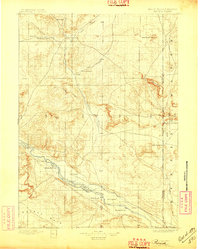 1896 Patrick1896 Print · USGSEastern Wyoming ranching life is frozen in time during the mid-1890s, when family-run operations dominated the high plains. Genealogists can trace early homesteads like Nolan's Ranch, Sturdivant's Ranch, and the early settlement at Torrington.7 unique versions available
 - 1896 Map of Lake
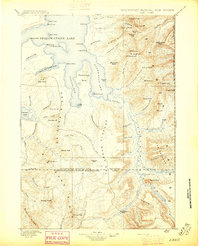 1896 Lake1896 Print · USGSThe high wilderness of the Wyoming Rockies is captured here in the late nineteenth century, just years after the park's establishment. Researchers can trace the wild southern reaches of Yellowstone Lake and find remote landmarks like Hawks Rest, Bridger Lake, and Brimstone Basin.
 - 1896 Map of Hartville
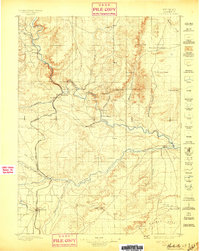 1896 Hartville1896 Print · USGSSoutheast Wyoming in the late nineteenth century was a territory of vital river crossings and early industry. Researchers can trace the junction of the Laramie River and North Platte River near Fort Laramie and locate early rail hubs at Wheatland and Wendover.
 - 1896 Map of Canyon
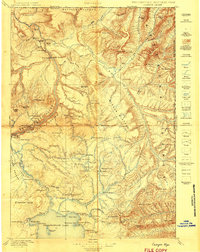 1896 Canyon1896 Print · USGSYellowstone National Park is documented in the mid-1890s, capturing the early landmarks and hydrothermal features of the canyon country. Trace the early outposts at Yanceys or the Hotel and locate thermal sites like Calcite Springs and the Fossil Forest.2 unique versions available
 - 1896 Map of Crandall Creek
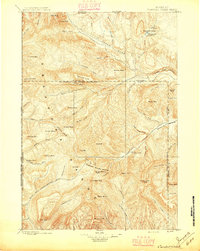 1896 Crandall Creek1896 Print · USGSThe high peaks of the Absaroka Range and the early Yellowstone frontier are captured in the 1890s. Trace the beginnings of the Sunlight Mining Region and identify landmarks like Beartooth Butte and Pilot Peak.
 - 1898 Map of Granite Mountain District
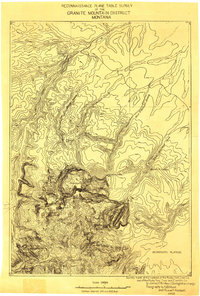 1898 Granite Mountain District1898 Print · USGSThe Beartooth Range appears here in the late nineteenth century during a specialized survey for regional coal and electric companies. Researchers can trace early mountain pathways through Goose Lake Pass and locate major summits like Granite Peak and Mt Dewey.
 - 1898 Map of Sundance
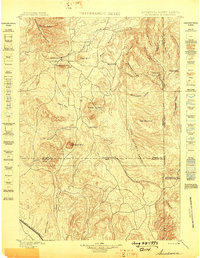 1898 Sundance1898 Print · USGSNorthwestern Wyoming and the Black Hills border come alive in the 1890s, when Sundance served as a key regional hub. Genealogists and local historians can trace early wagon routes connecting settlements like Manhattan, Welcome, and Inyankara.
 - 1898 Map of Bald Mountain, 1957 Print
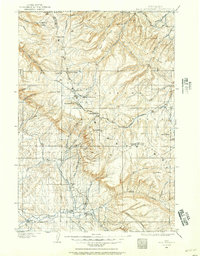 1898 Bald Mountain1957 Print · USGSThe northern Bighorn Mountains appear in the 1890s as a frontier of high-altitude ranching and mining. Trace the early trails leading to the Fortunatus Mill, remote landmarks like Sheldons Ranch, and the isolated settlement of Cloverly.2 unique versions available
 - 1899 Map of Goshen Hole
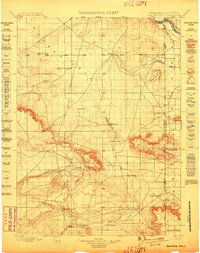 1899 Goshen Hole1899 Print · USGSThe High Plains of the Wyoming-Nebraska borderlands come into focus at the close of the nineteenth century. Researchers can trace the early cattle ranching economy through named homesteads like Greasewood Ranch and Robb's Ranch, and locate landmarks such as Ninemile Rock.4 unique versions available
 - 1899 Map of Crandall
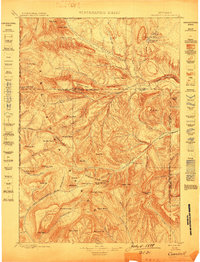 1899 Crandall1899 Print · USGSThe Absaroka mountains and northern park lands are captured here during the frontier mining era of the 1890s. Researchers can trace early claims in the Sunlight Mining Region and identify landmarks like Pilot Peak and Beartooth Butte.4 unique versions available
 - 1899 Map of Ishawooa
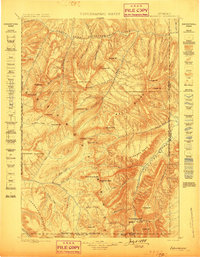 1899 Ishawooa1899 Print · USGSThe Absaroka wilderness comes into sharp focus in the 1890s, revealing the high-mountain terrain bordering the eastern edge of Yellowstone. Researchers can trace early prospecting sites in the Stinkingwater Mining Region or locate landmarks like Ishawooa Pass and Sheep Mesa.4 unique versions available
Showing maps 1-25
Top cities of Wyoming
- Cheyenne historical maps
- Casper historical maps
- Laramie historical maps
- Gillette historical maps
- Rock Springs historical maps
- Sheridan historical maps
See more
Top counties of Wyoming
- Laramie County historical maps
- Natrona County historical maps
- Campbell County historical maps
- Sweetwater County historical maps
- Fremont County historical maps
- Albany County historical maps
See more
Frequently asked questions
- What are the different types of historical maps available for Wyoming?
- What is the oldest map of Wyoming?
- Where can I purchase historical maps of Wyoming for my home or office?
- Where can I download high-res historical maps of Wyoming?
- Are there historical topographic maps available for Wyoming?
- Is there historical aerial imagery available for Wyoming?
- Where are historical maps of Wyoming sourced from?