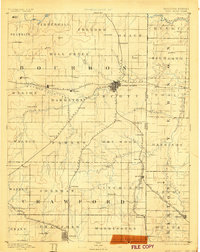
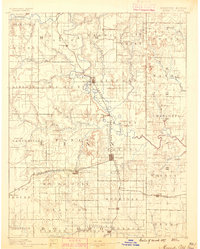
1893 Map of Ft Scott
USGS Topo · Published 1900About this map
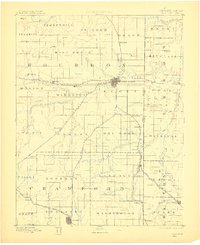
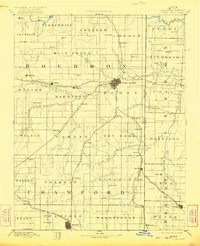
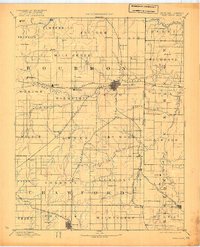
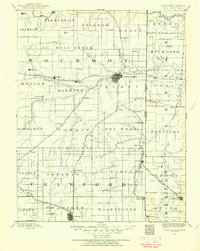
Fort Scott serves as the central hub of this late 19th-century landscape, where a dense network of iron rails converges. The map documents a critical period of expansion for Southeast Kansas and Western Missouri, illustrating how the St Louis Ft Scott and Wichita Railroad and the Kansas City Ft Scott and Gulf Railroad dictated the placement of emerging townships. The Marmaton River and Little Osage River cut eastward across the plains, providing the natural drainage that defined early land tracts. Smaller agricultural settlements and rail stops such as Hiattville, Hepler, and Arcadia are positioned along these corridors. Notable for genealogists, the map also identifies more obscure locales like Zenia (Hay) and Gilfillan, offering a clear view of the Kansas Missouri Boundary Line as it existed before the turn of the century.
Find a feature on this map
74 named features on this map. Tap any name to fly to it.
Don’t see what you’re looking for? This feature index may not catch every label — zoom into the map to look around manually.
Map Details
Editions of this 1893 Ft Scott Map
7 editions found
Other maps of this area
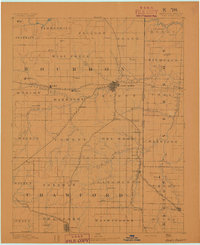
1884 · Fort Scott
USGS Topo · 1:125,000
1885 · Garnett
USGS Topo · 1:125,000
1886 · Nevada
USGS Topo · 1:125,000
1886 · Joplin
USGS Topo · 1:125,000
1886 · Iola
USGS Topo · 1:125,000
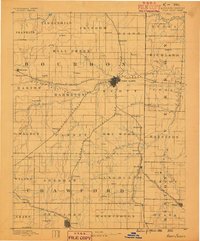
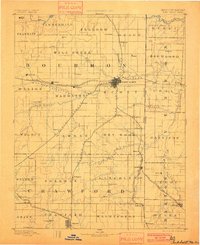
1886 · Fort Scott
USGS Topo · 1:125,000
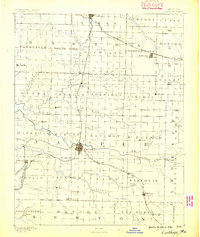
1886 · Carthage
USGS Topo · 1:125,000
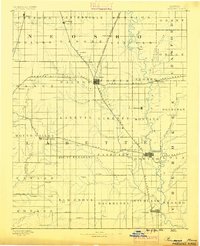
1886 · Parsons
USGS Topo · 1:125,000
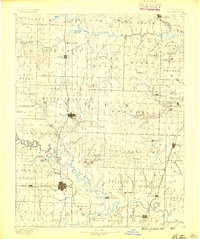
1887 · Butler
USGS Topo · 1:125,000
1887 · Mound City
USGS Topo · 1:125,000