1930s Maps of Montana
Explore 49 historic maps of Montana from the 1930s. These maps offer a rare glimpse into what life looked like during the 1930s — showing old roads, neighborhoods, homes, and landmarks that have changed or disappeared over time.
Whether you're researching your family's past, planning a metal detecting trip, or studying how Montana's landscape evolved across the 1930s, these high-resolution maps are a powerful tool for exploring the history of this region.
- Focus on a specific era: All maps on this page are from the 1930s, giving you a focused view of this time period.
- See what’s changed: Compare century-old streets, trails, and buildings to today's modern landscape using overlays and satellite layers.
- Research with precision: Use these maps for genealogy, historical research, land use analysis, or educational projects.
- View, download, or print: Maps are fully viewable online in high resolution, and can be downloaded or printed for your own records.
Start exploring Montana's history through authentic maps from the 1930s. This is your window into the past.
Montana maps
- 1930 Map of Libby, 1960 Print
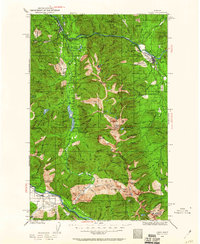 1930 Libby1960 Print · USGSNorthwestern Montana at the opening of the 1930s is a rugged domain of mountain mining and timber camps. Genealogists and researchers can trace early settlers through labels like Old Town, Bull Lake Sch, and high-country operations such as the Snowshoe Mine.
 - 1932 Map of Red Lodge No 2
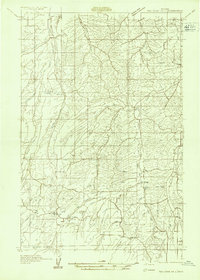 1932 Red Lodge No 21932 Print · USGSCarbon County ranching country is documented in detail during the early 1930s, showing a landscape organized around mountain streams and rural post offices. Genealogists can locate family-named landmarks and country schools like Inderland Sch, Jackson Sch, and the community at Fishtail.
 - 1932 Map of Libby
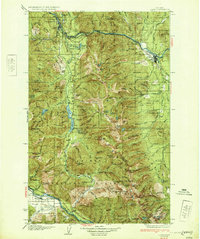 1932 Libby1932 Print · USGSThe Kootenai River valley and surrounding mountain ranges are captured here in the early 1930s during the height of the region's mining and timber era. Genealogists and historians can locate remote landmarks like Old Town, the Snowshoe Mine, and early rural schools including Bull Lake Sch.3 unique versions available
 - 1932 Map of Red Lodge No 1
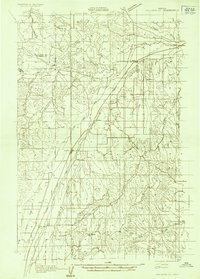 1932 Red Lodge No 11932 Print · USGSCarbon County ranching and early energy infrastructure are on display in this early 1930s survey of the northern Beartooth foothills. Genealogists and historians can trace the rail corridor between Roberts and Boyd or locate industrial sites like the Gas Control Sta.
 - 1932 Map of Nye No 1
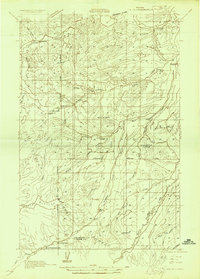 1932 Nye No 11932 Print · USGSStillwater and Carbon counties appear here in the early 1930s, as ranching settlements met the mountain wilderness. Genealogists and local historians can trace the foundations of Fishtail, locate the Dean PO, and follow trails into the Beartooth National Forest.
 - 1932 Map of Nye No 2
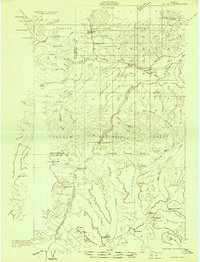 1932 Nye No 21932 Print · USGSStillwater County’s high country comes into focus in the early 1930s, showing the early infrastructure of the national forests. Genealogists and historians can locate the Nye PO, trace the irrigation networks of Horseman Flats, and find remote landmarks like Beartooth Ranch.
 - 1932 Map of Trout Creek, 1955 Print
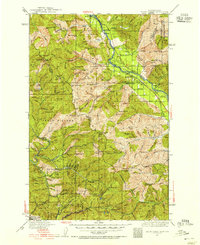 1932 Trout Creek1955 Print · USGSThe Clark Fork River corridor in the 1930s shows a landscape of mountain rail travel and early forest management. Genealogists and historians can locate rural schools like Ayers School, local industry at Tuscor Mill, and old mining sites such as the Jack White Mine.
 - 1934 Map of Lake Frances
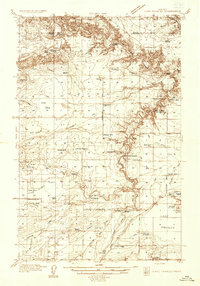 1934 Lake Frances1934 Print · USGSThe Blackfeet Reservation and Pondera County come alive in the mid-1930s, showing a complex network of canals and family ranching. Genealogists can trace family holdings like Wolsfad Ranch or locate the Lakeview Cem and several coal mines including the Slezic Mine.
 - 1934 Map of Valier, 1962 Print
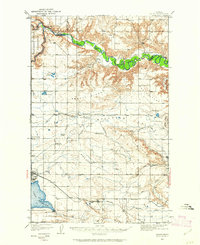 1934 Valier1962 Print · USGSThe northern Montana plains come alive in the 1930s as a hub of irrigation and rail at the edge of the Blackfeet Indian Reservation. Genealogists can trace family holdings and local landmarks like Belgian Ch, Valier, and the Montana Western railroad terminus.2 unique versions available
 - 1935 Map of Thompson Lakes
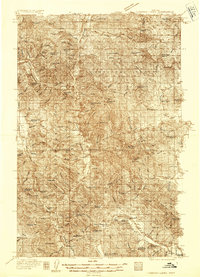 1935 Thompson Lakes1935 Print · USGSNorthwestern Montana in the mid-thirties was a rugged domain of timber management and rail-line outposts. Researchers can trace the Great Northern Ry through Jennings or locate remote schools like the Thompson River Sch and Manicke Sch.3 unique versions available
 - 1935 Map of Trout Creek, 1949 Print
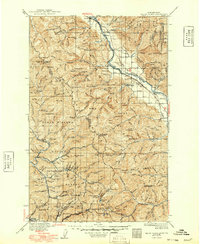 1935 Trout Creek1949 Print · USGSThe Clark Fork valley and the mining districts of Shoshone County are caught in high detail in the 1930s. Genealogists and historians can trace rail-side schools like Tuscor Sch, the operations at Jack Waite Mine, and old settlements from Noxon to Mace.
 - 1936 Map of Silvertip
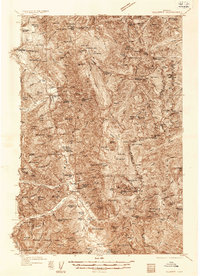 1936 Silvertip1936 Print · USGSThe Flathead National Forest wilderness in the mid-1930s was a land of isolated outposts and early aviation. Researchers can trace the early ranger station network at Spotted Bear Ranger Sta and remote landmarks like Indian Camp or Limestone Cabin.3 unique versions available
 - 1936 Map of Pendroy
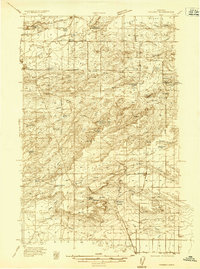 1936 Pendroy1936 Print · USGSThe railhead at Pendroy and the neighboring ranching communities were thriving in the mid-1930s before the era of modern consolidation. Researchers can trace family homesteads like Jensen Ranch or investigate early resource extraction at the Hubbard Mine and Oil Well sites.2 unique versions available
 - 1936 Map of Trout Creek
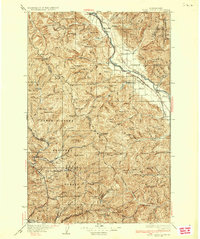 1936 Trout Creek1936 Print · USGSThe Clark Fork valley and the Bitterroot mountains are captured here in the mid-1930s, showing a landscape defined by timber and mining. Researchers can trace the industrial footprint of the Tuscor Mill, remote operations like the Jack Waite Mine, and old mountain schools such as Flat Sch.2 unique versions available
 - 1937 Map of Valier
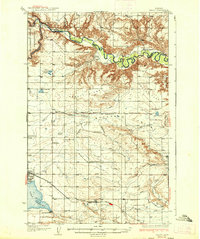 1937 Valier1937 Print · USGSPondera County’s irrigation-driven agriculture is in full bloom during the mid-1930s as the Montana Western railroad serves the prairie. Genealogists can locate family holdings like Parker Ranch and trace the many local school districts such as Winginaw Valley Sch or Lone Tree Sch.2 unique versions available
 - 1937 Map of Thompson Falls
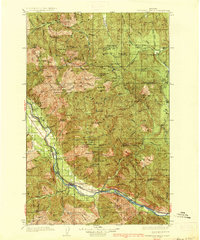 1937 Thompson Falls1937 Print · USGSThe Clark Fork river valley and the high Cabinet Mountains are documented here in the mid-1930s. Genealogists and researchers can trace the early railroad communities of Thompson Falls and Belknap or locate the Silver Butte Fisher Sch and Bend Ranger Sta.2 unique versions available
 - 1937 Map of Lake Frances
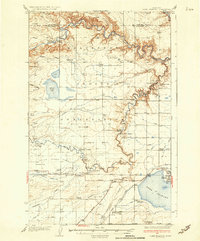 1937 Lake Frances1937 Print · USGSThe high plains of Pondera County come alive in the mid-1930s as irrigation projects and small-scale coal mining reshape the landscape. Genealogists and local historians can locate specific homesteads like Bartley Ranch, find long-forgotten mines including Blair Mine, or trace the grounds of the Lakeview Cem and State Fish Hatchery.3 unique versions available
 - 1937 Map of Thompson Falls, 1949 Print
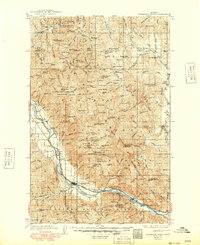 1937 Thompson Falls1949 Print · USGSThe Clark Fork valley in the 1930s was a vital corridor defined by the Northern Pacific Line and riverside settlements. Researchers can trace early infrastructure and mountain life through the locations of the Silver Butte Fisher Sch, the Bend Ranger Sta, and the ferry at Eddy.
 - 1938 Map of Gallup City, 1942 Print
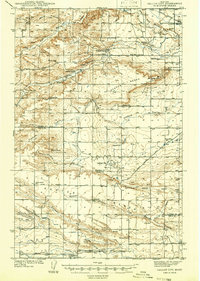 1938 Gallup City1942 Print · USGSThe ranching country of Pondera and Teton counties comes to life in the late 1930s as a landscape of remote schoolhouses and family homesteads. Researchers can trace the legacy of early settlers at Graham Ranch or locate long-gone rural schools like Earhart Sch and Rowe Kamp Sch.2 unique versions available
 - 1938 Map of Chief Mountain, 1953 Print
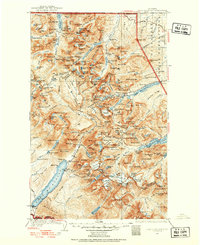 1938 Chief Mountain1953 Print · USGSGlacier National Park and the neighboring Blackfeet Indian Reservation are shown here during the late thirties as the modern highway system was taking shape. You can trace the early tourism and management landscape through Going-to-the-Sun Chalet, Many Glacier, and the remote Sperry Chalet.8 unique versions available
 - 1938 Map of Kintla Lakes, 1954 Print
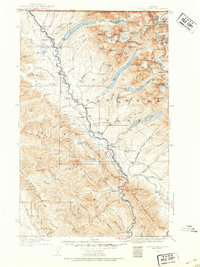 1938 Kintla Lakes1954 Print · USGSThe northern reaches of the Montana Rockies are shown here during the early years of the National Park Service. Researchers can locate early homesteads and remote outposts like Brills Ranch, Polebridge, and Theo Christensen Ranch along the Flathead River.
 - 1939 Map of Sunburst, 1941 Print
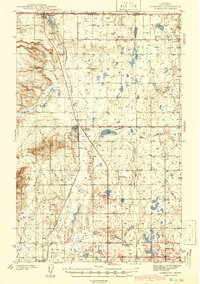 1939 Sunburst1941 Print · USGSToole County's oil boom and border-town life are preserved in this late 1930s survey of the northern Montana plains. Trace the early petroleum economy through Ohio Camp and Texas Pacific Camp or find family roots at Willshaw Sch.3 unique versions available
 - 1939 Map of Mt Wood, 1941 Print
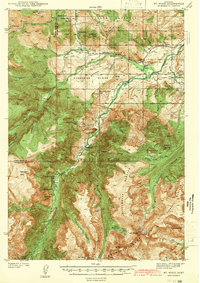 1939 Mt Wood1941 Print · USGSStillwater County comes alive in the late thirties, documenting a rugged mining and ranching frontier within the Custer National Forest. Genealogists and historians can trace local landmarks like Nye, the Benbow Mine, and the Limestone Sch.4 unique versions available
End of results
Showing maps 1-23
Top cities of Montana
- Billings historical maps
- Missoula historical maps
- Great Falls historical maps
- Bozeman historical maps
- Butte historical maps
- Helena historical maps
See more
Top counties of Montana
- Yellowstone County historical maps
- Missoula County historical maps
- Gallatin County historical maps
- Flathead County historical maps
- Cascade County historical maps
- Lewis and Clark County historical maps
See more
Frequently asked questions
- What are the different types of historical maps available for Montana?
- What is the oldest map of Montana?
- Where can I purchase historical maps of Montana for my home or office?
- Where can I download high-res historical maps of Montana?
- Are there historical topographic maps available for Montana?
- Is there historical aerial imagery available for Montana?
- Where are historical maps of Montana sourced from?