1800s (19th Century) Maps of Florida
Explore 12 historic maps of Florida from the 1800s (19th Century). These maps offer a rare glimpse into what life looked like during the 1800s — showing old roads, neighborhoods, homes, and landmarks that have changed or disappeared over time.
Whether you're researching your family's past, planning a metal detecting trip, or studying how Florida's landscape evolved across the 1800s, these high-resolution maps are a powerful tool for exploring the history of this region.
- Focus on a specific era: All maps on this page are from the 1800s, giving you a focused view of this time period.
- See what’s changed: Compare century-old streets, trails, and buildings to today's modern landscape using overlays and satellite layers.
- Research with precision: Use these maps for genealogy, historical research, land use analysis, or educational projects.
- View, download, or print: Maps are fully viewable online in high resolution, and can be downloaded or printed for your own records.
Start exploring Florida's history through authentic maps from the 1800s. This is your window into the past.
Florida maps
(12)- 1890 Map of Arredondo, 1955 Print
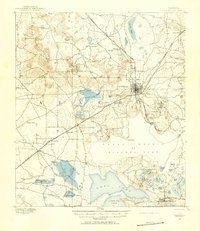 1890 Arredondo1955 Print · USGSAlachua County at the end of the nineteenth century shows a landscape where iron rails were rapidly connecting old prairie settlements. Genealogists and historians can trace the early rail stops at Arredondo, locate the distinctive Devils Mill Hopper, and see the early layout of Gainesville.2 unique versions available
 - 1892 Map of Dunnellon
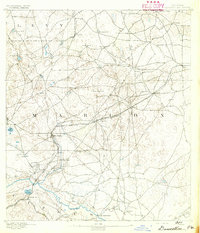 1892 Dunnellon1892 Print · USGSMarion and Levy counties were at the center of a phosphate boom in the early 1890s, anchored by the riverfront settlement of Dunnellon. Researchers can trace the early industrial footprint of Eagle Mines, find rural community hubs like Cotton Plant, and locate historical crossings such as Fish Ferry.
 - 1892 Map of Arredondo
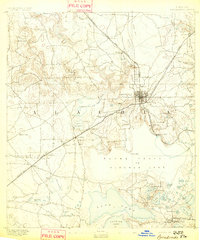 1892 Arredondo1892 Print · USGSAlachua County is captured here in the late nineteenth century as a hub of early Florida rail commerce. Genealogists and historians can trace the foundations of Gainesville and smaller rural communities such as Arredondo, Stewartville, and Micanopy.
 - 1893 Map of Panasoffkee, 1958 Print
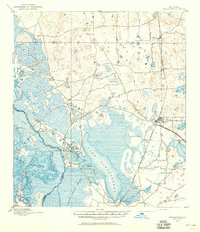 1893 Panasoffkee1958 Print · USGSSumter County was a landscape of expansive wetlands and early rail outposts during the 1890s. Genealogists and historians can trace the early rail stops at Wildwood and Coleman or locate historic waters like Lake Panasoffkee and Warm Spring.
 - 1893 Map of Citra, 1960 Print
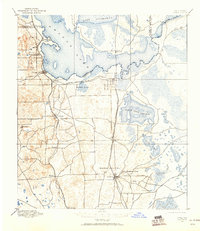 1893 Citra1960 Print · USGSMarion County in the late nineteenth century was a hub of industrial mining and railroad expansion. Genealogists and historians can trace the early phosphate boom at the French Phosphate Mines or locate old rail stops in Citra, McIntosh, and Anthony.
 - 1894 Map of Dunnellon
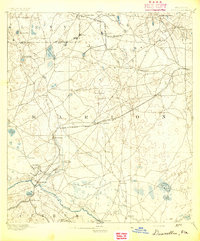 1894 Dunnellon1894 Print · USGSMarion and Citrus counties were centers of a burgeoning phosphate boom in the early 1890s, where river and rail infrastructure converged. You can trace early mining operations like the Chicago Mine and Eagle Mine alongside historic river crossings at Fisk Ferry.5 unique versions available
 - 1894 Map of Arredondo
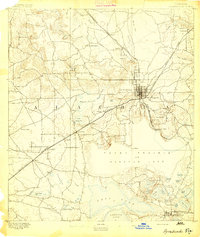 1894 Arredondo1894 Print · USGSAlachua County at the close of the nineteenth century is defined by its new rail junctions and expansive, shifting wet prairies. Researchers can trace the early footprints of Gainesville or locate vanished sites near Arredondo, Kanapaha, and the banks of Levy Lake.6 unique versions available
 - 1895 Map of Williston
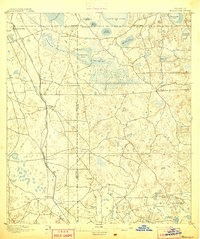 1895 Williston1895 Print · USGSNorth Central Florida in the mid-1890s reveals a landscape shaped by phosphate mining and the arrival of the iron horse. Genealogists and historians can trace early rail hubs like Williston and Montbrook, alongside industrial sites like Standard Mine and Phosphate.6 unique versions available
 - 1895 Map of Tsala Apopka
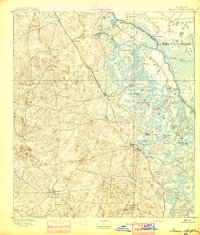 1895 Tsala Apopka1895 Print · USGSCentral Florida's interior in the early 1890s was a landscape of citrus groves and pine hills meeting the labyrinth of the Tsala Apopka Lake system. Researchers can trace early railroad towns like Hernando and Mannfield alongside river landmarks such as Stokes Ferry and the Hamburg Mine.7 unique versions available
 - 1895 Map of Citra
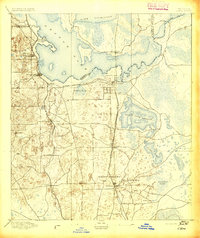 1895 Citra1895 Print · USGSNorthern Marion County and southern Alachua County are shown here in the 1890s, when phosphate mining and citrus transport drove the local economy. Trace the old rail lines and explore the sites of the French Phosphate Mines, Citra, and McIntosh.6 unique versions available
 - 1895 Map of Panasoffkee
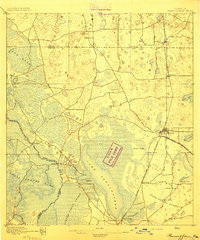 1895 Panasoffkee1895 Print · USGSSumter County in the 1890s reveals a landscape of expansive wetlands and emerging rail towns. Genealogists and local historians can trace early settlements like Royal and Oxford or follow the route of the Florida Central and Peninsular RR.5 unique versions available
 - 1895 Map of Ocala
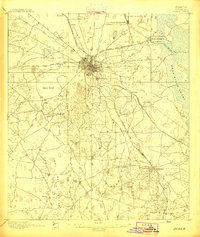 1895 Ocala1895 Print · USGSMarion County at the end of the nineteenth century was a bustling intersection of rail and water. Researchers can trace the early footprints of Ocala and Silver Springs, or locate smaller stops along the Florida Southern R. R. like Santos and Belleview.7 unique versions available
End of results
Showing maps 1-12 of 12
Top cities of Florida
- Jacksonville historical maps
- Miami historical maps
- Tampa historical maps
- Orlando historical maps
- Saint Petersburg historical maps
- Hialeah historical maps
See more
Top counties of Florida
- Miami-Dade County historical maps
- Broward County historical maps
- Palm Beach County historical maps
- Hillsborough County historical maps
- Orange County historical maps
- Pinellas County historical maps
See more
Frequently asked questions
- What are the different types of historical maps available for Florida?
- What is the oldest map of Florida?
- Where can I purchase historical maps of Florida for my home or office?
- Where can I download high-res historical maps of Florida?
- Are there historical topographic maps available for Florida?
- Is there historical aerial imagery available for Florida?
- Where are historical maps of Florida sourced from?