1930s Maps of Florida
Explore 24 historic maps of Florida from the 1930s. These maps offer a rare glimpse into what life looked like during the 1930s — showing old roads, neighborhoods, homes, and landmarks that have changed or disappeared over time.
Whether you're researching your family's past, planning a metal detecting trip, or studying how Florida's landscape evolved across the 1930s, these high-resolution maps are a powerful tool for exploring the history of this region.
- Focus on a specific era: All maps on this page are from the 1930s, giving you a focused view of this time period.
- See what’s changed: Compare century-old streets, trails, and buildings to today's modern landscape using overlays and satellite layers.
- Research with precision: Use these maps for genealogy, historical research, land use analysis, or educational projects.
- View, download, or print: Maps are fully viewable online in high resolution, and can be downloaded or printed for your own records.
Start exploring Florida's history through authentic maps from the 1930s. This is your window into the past.
Florida maps
(24)- 1934 Map of Holt
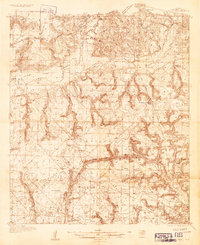 1934 Holt1934 Print · USGSOkaloosa County at the height of the Great Depression was defined by the massive Choctawhatchee National Forest and the early timber industry. Researchers can trace the path of the Louisville and Nashville Railroad and locate vanished sites like Keyser Mill, TURPENTINE CAMP, and Antioch Ch.
 - 1934 Map of Harold
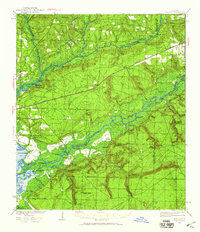 1934 Harold1934 Print · USGSSanta Rosa County and the Florida Panhandle are shown here in the 1930s, defined by the winding paths of the Blackwater and Yellow Rivers. Researchers can locate family landmarks like the Old Whitmier Place, Kellys Mill, and several river access points including Faulks Ferry Landing.3 unique versions available
 - 1934 Map of Niceville
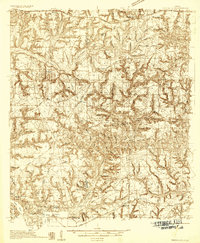 1934 Niceville1934 Print · USGSThe Florida Panhandle in the mid-thirties reveals a landscape of tidal bayous and managed pine forests. Researchers can trace early infrastructure like the Bolton Turpentine Still, State Convict Camp No 12, and the path of the Old Spanish Trail.
 - 1935 Map of Villa Tasso
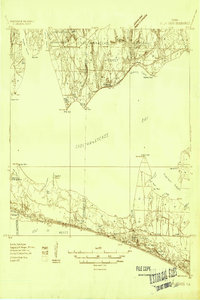 1935 Villa Tasso1935 Print · USGSThe Florida Panhandle's coast appears here in the mid-1930s, showing a landscape of federal forests and burgeoning recreation. You can trace early sites like Postls Resort, the State 4H Club Camp, and the extensive Moreno Point Military Reservation.
 - 1935 Map of De Funiak Springs
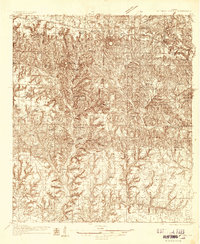 1935 De Funiak Springs1935 Print · USGSWalton County in the mid-1930s shows a landscape of rural schools and family homesteads centered around the rail hub of De Funiak Springs. Genealogists can trace family locations near Magnolia Cem, Seckinger Mill, and the many one-room schoolhouses like Indian Head Sch.2 unique versions available
 - 1936 Map of Niceville
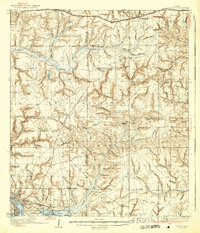 1936 Niceville1936 Print · USGSThe Okaloosa and Walton County line area is documented here in the mid-1930s, showing the transition from northern rail towns to coastal settlements. You can trace early family landmarks and infrastructure like Early Cem, Spencer Flats, and the Ramer Lookout Tower.4 unique versions available
 - 1936 Map of Point Washington
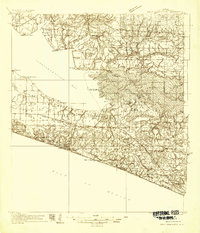 1936 Point Washington1936 Print · USGSCoastal Walton County in the mid-1930s reveals a maritime landscape defined by river deltas and emerging beach communities. Genealogists and historians can trace the early footprints of Seagrove Beach and Point Washington, or locate the Bunker Cem and Pt. Washington Light House.2 unique versions available
 - 1936 Map of Holley
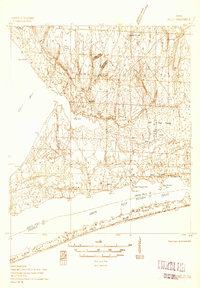 1936 Holley1936 Print · USGSThe Florida Panhandle coast near Santa Rosa County appears here during the mid-1930s, showing a quiet landscape of timber and wetlands. Genealogists and historians can trace early settlements at Holley and Navarre or locate landmarks like the Indian Head Fire Tower and Holley Ch.3 unique versions available
 - 1937 Map of Holt
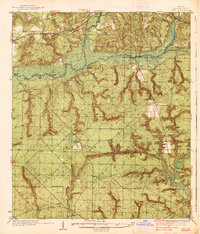 1937 Holt1937 Print · USGSNorth Florida’s pine woods and river landings are captured in the mid-1930s, just as modern forestry and rail networks were maturing. Genealogists can trace old routes like the Nashville Trail or locate early industrial sites such as Bowser Mill and the Tar Plant.4 unique versions available
 - 1937 Map of Bakersville
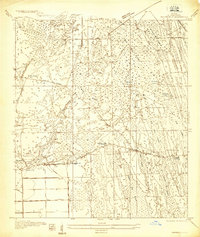 1937 Bakersville1937 Print · USGSIn the late 1930s, the St. Johns County backcountry was a mosaic of deep swamps and historic transit routes. Researchers can trace the ancestral locations of the Bakersville Ch and Mill Creek Sch or locate the curious Theatrical Troop Monument.
 - 1937 Map of Elkton
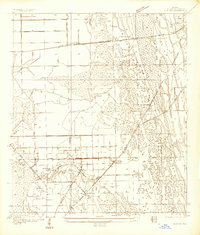 1937 Elkton1937 Print · USGSSt. Johns County, Florida, is shown in the late thirties during the height of the regional turpentine and rail era. Researchers can trace the layout of Elkton, locate the St Ambrose church, and explore early industrial sites like the Turpentine Camp.
 - 1937 Map of Crescent Beach
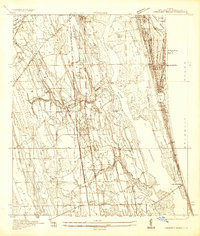 1937 Crescent Beach1937 Print · USGSCoastal St. Johns County in the late thirties shows a landscape of developing beach colonies and inland rail outposts. Researchers can locate the San Lorenzo Cem, trace the grounds of Fort Peyton, or explore industrial sites like the Turpentine Camp.
 - 1937 Map of Dinner Island
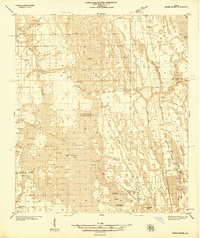 1937 Dinner Island1937 Print · USGSThe Florida interior of the late 1930s is revealed here as a landscape of vast wetlands punctuated by isolated ridges and timber outposts. Researchers can trace the path of the Old Kings Road or locate early stations like Dinner Island Sta. and Neoga Sta.
 - 1937 Map of St. Augustine
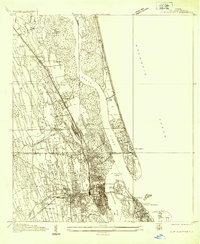 1937 St. Augustine1937 Print · USGSCoastal Florida is captured here in the late thirties, showing the historic streets of St Augustine and its surrounding marshlands. Researchers can trace the layout of Fort Marion, locate Evergreen Cemetery, and find early beach developments at Vilano Beach.
 - 1937 Map of Port Orange
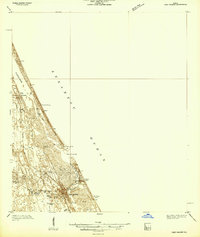 1937 Port Orange1937 Print · USGSThe Volusia County coastline in the late thirties shows a burgeoning network of seaside colonies and rail-connected towns. Genealogists and historians can trace old homesteads and landmarks like the Old Franciscan Mission, Isleboro, and the East Coast Railway.
 - 1937 Map of Ormond
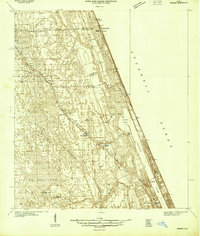 1937 Ormond1937 Print · USGSCoastal Florida in the late thirties is defined by a landscape of vast cypress swamps and emerging rail towns. Genealogists and historians can trace old homesteads and industrial sites like the Relay Turpentine Still, Haywood Sta., and National Gardens.
 - 1937 Map of Harold, 1942 Print
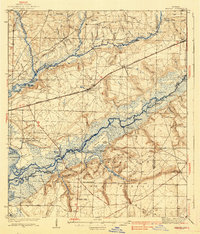 1937 Harold1942 Print · USGSSanta Rosa County's river-and-rail landscape is captured here in the mid-1930s, showing a world of timber landings and rural parishes. Trace family history through Pleasant Home Ch, find the Old Whitmier Place, or locate Faulks Ferry Landing along the Yellow River.
 - 1938 Map of Mary Esther
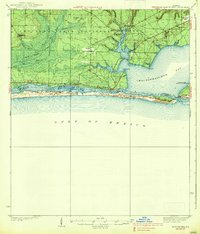 1938 Mary Esther1938 Print · USGSThe Florida Panhandle coastline appears in the mid-1930s as a landscape of federal forests and quiet waterfront settlements. You can trace the early footprints of Fort Walton and Mary Esther, or locate forestry landmarks like the Pinchot Lookout Tower.4 unique versions available
 - 1938 Map of Villa Tasso
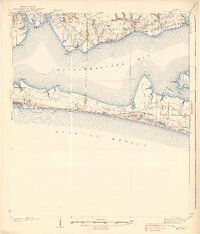 1938 Villa Tasso1938 Print · USGSChoctawhatchee Bay and the Emerald Coast appear here in the mid-1930s, showing a landscape defined by military land and national forest. Trace early development in Valparaiso or follow the Gulf Coast Highway past coastal gems like Stewart Lake and Topsail Hill.4 unique versions available
 - 1938 Map of Hawthorn
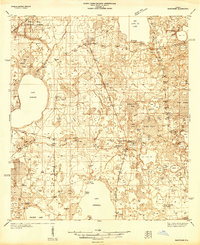 1938 Hawthorn1938 Print · USGSAlachua County in the late thirties is a landscape of intersecting railroads and sprawling lakeside settlements. Genealogists and historians can trace the foundations of Hawthorn, locate remote burial sites like Riley Cem, and explore the rail junctions at Micanopy Junction.
 - 1938 Map of Holley
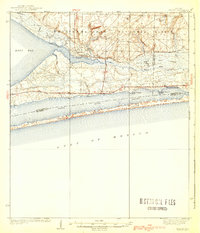 1938 Holley1938 Print · USGSThe Florida Panhandle's coastline and interior forests appear here in the mid-thirties, before modern development transformed the shore. Researchers can trace early settlements at Holley and Navarre or locate landmarks like the East Bay Ch and East Bay Ranger Station.3 unique versions available
 - 1938 Map of Harold
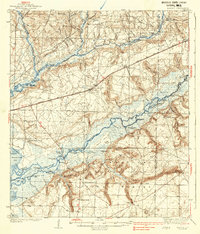 1938 Harold1938 Print · USGSThe Florida panhandle comes alive in the late 1930s, showing a timber-and-rail landscape shaped by the Blackwater River. Genealogists and historians can trace family roots at Old Whitmier Place, Flowers Field Cemetery, and several rural churches like Welcome Ch.4 unique versions available
 - 1938 Map of De Funiak Springs
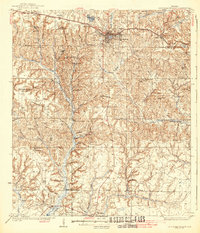 1938 De Funiak Springs1938 Print · USGSWalton County in the late thirties is a landscape of creek-side mills and timberlands stretching from the Louisville and Nashville RR down to the bay. Genealogists can locate family landmarks like Oak Ridge Cem, trace old routes at Old Walton Bridge, and find rural school sites like Eucheanna Sch.4 unique versions available
 - 1939 Map of Point Washington
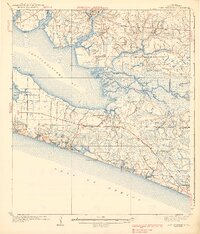 1939 Point Washington1939 Print · USGSThe Florida Panhandle coast near Walton County shows its quiet pre-development character during the late 1930s. Genealogists and local historians can trace the foundations of early beach settlements at Grayton Beach and Point Washington, or locate the Liberty Sch and Black Creek Chs inland.3 unique versions available
End of results
Showing maps 1-24 of 24
Top cities of Florida
- Jacksonville historical maps
- Miami historical maps
- Tampa historical maps
- Orlando historical maps
- Saint Petersburg historical maps
- Hialeah historical maps
See more
Top counties of Florida
- Miami-Dade County historical maps
- Broward County historical maps
- Palm Beach County historical maps
- Hillsborough County historical maps
- Orange County historical maps
- Pinellas County historical maps
See more
Frequently asked questions
- What are the different types of historical maps available for Florida?
- What is the oldest map of Florida?
- Where can I purchase historical maps of Florida for my home or office?
- Where can I download high-res historical maps of Florida?
- Are there historical topographic maps available for Florida?
- Is there historical aerial imagery available for Florida?
- Where are historical maps of Florida sourced from?