1950s Maps of North Carolina
Explore 274 historic maps of North Carolina from the 1950s. These maps offer a rare glimpse into what life looked like during the 1950s — showing old roads, neighborhoods, homes, and landmarks that have changed or disappeared over time.
Whether you're researching your family's past, planning a metal detecting trip, or studying how North Carolina's landscape evolved across the 1950s, these high-resolution maps are a powerful tool for exploring the history of this region.
- Focus on a specific era: All maps on this page are from the 1950s, giving you a focused view of this time period.
- See what’s changed: Compare century-old streets, trails, and buildings to today's modern landscape using overlays and satellite layers.
- Research with precision: Use these maps for genealogy, historical research, land use analysis, or educational projects.
- View, download, or print: Maps are fully viewable online in high resolution, and can be downloaded or printed for your own records.
Start exploring North Carolina's history through authentic maps from the 1950s. This is your window into the past.
North Carolina maps
(274)- 1950 Map of Cape Hatteras
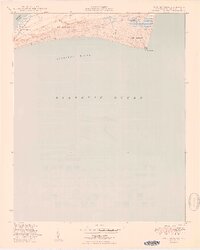 1950 Cape Hatteras1950 Print · USGSThe Outer Banks come to life in this mid-century survey of the North Carolina coast during a period of transition for its maritime communities. Trace the shoreline from Frisco to Cape Point, locating landmarks like Little Grove Ch and the Coast Guard Sta.2 unique versions available
 - 1950 Map of Clifdale
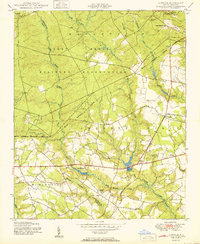 1950 Clifdale1950 Print · USGSCumberland County at mid-century reveals the intersection of expanding military operations and established rural communities south of the base. Genealogists and historians can trace family-named landmarks and gathering places like Galatia Church, 71st High School, and the settlement at Clifdale.2 unique versions available
 - 1950 Map of Howard Reef
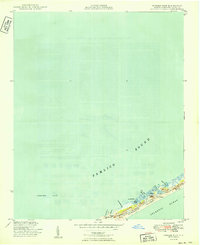 1950 Howard Reef1950 Print · USGSThe Outer Banks during the late 1940s reveals a sparse, windswept landscape of barrier islands and sound-side camps. Genealogists and coastal historians can trace early footprints at Cass Williams Camp, Parkers Hill, and along the lone Telephone Line.3 unique versions available
 - 1950 Map of Winnabow
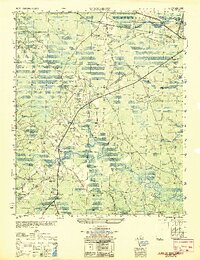 1950 Winnabow1950 Print · USGSCoastal Brunswick County is shown here during a mid-century period of shifting transit as rail service was winding down. Genealogists can locate family landmarks like Dora Benton Cem, Easy Hill, and the Wayside Church near Winnabow.
 - 1950 Map of Concord
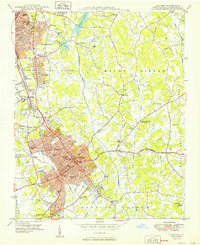 1950 Concord1950 Print · USGSCabarrus County witnessed significant suburban development and industrial stability during the mid-twentieth century. Genealogists can trace family roots through numerous country landmarks like Heilmans Mill, Barber-Scotia College, and Carolina Memorial Park Cem.
 - 1950 Map of Sanatorium
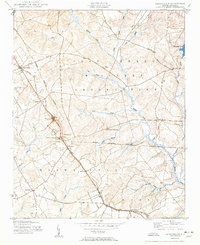 1950 Sanatorium1950 Print · USGSThe rural communities of Hoke and Moore counties are shown here just after the war, centered on the State Tuberculosis Sanatorium. Genealogists can trace family footprints near Ashley Heights and Timberland, or locate old landmarks like Sandy Grove Ch.2 unique versions available
 - 1950 Map of Buxton
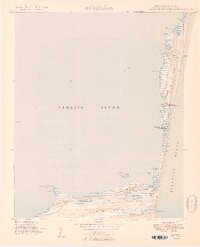 1950 Buxton1950 Print · USGSThe Outer Banks come alive in this mid-century survey of Hatteras Island as it appeared before modern development. You can trace early maritime history through landmarks like the Cape Hatteras Lighthouse and the small coastal village of Avon.2 unique versions available
 - 1950 Map of Lobelia
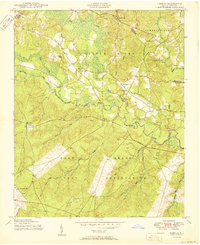 1950 Lobelia1950 Print · USGSThe North Carolina Sandhills met military expansion during the mid-century as the Fort Bragg boundary reached northward. Genealogists can trace early landmarks like Frys Mission School, Lobelia, and Cypress Church along the Little River.
 - 1950 Map of Horsepen Point
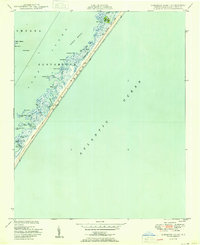 1950 Horsepen Point1950 Print · USGSThe North Carolina Outer Banks appear in their mid-century state, showing the narrow ribbon of Core Banks and the marshy expanse of Core Sound. Genealogists and maritime historians can trace family-named coastal features like Guthrie Hammock, Lewis Island, and Rawson Cr.
 - 1950 Map of Fayetteville
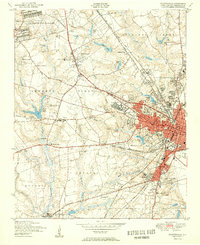 1950 Fayetteville1950 Print · USGSMid-century Fayetteville is a bustling hub where the growing city limits meet the rural traditions of Cumberland County. Genealogists and historians can trace the foundations of local neighborhoods through sites like the State Teachers College, McPhersons Ch Cem, and the old rail stop at Skibo Station.2 unique versions available
 - 1950 Map of Portsmouth
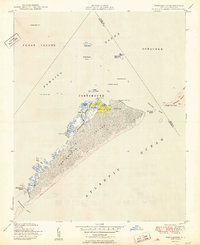 1950 Portsmouth1950 Print · USGSThe Outer Banks village of Portsmouth is captured at mid-century, before it was completely vacated. Genealogists and maritime historians can trace the foundations of this island community and landmarks like Shell Castle, The High Hills, and Beacon Island.2 unique versions available
 - 1950 Map of Manchester
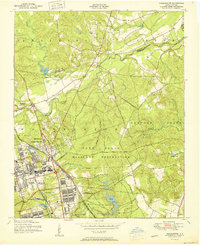 1950 Manchester1950 Print · USGSMid-century Cumberland County is captured here during a period of significant military growth and rail activity. Researchers can trace the development of Fort Bragg alongside civilian landmarks like Manchester Spring Lake PO and Bethel Ch.
 - 1950 Map of Slocomb
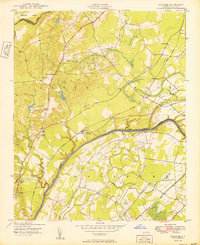 1950 Slocomb1950 Print · USGSCumberland County at the dawn of the 1950s shows a landscape of river-bend settlements and rail-line industry. Researchers can trace the roots of small communities like Slocomb and Carlos, or locate rural landmarks like Palestine Church and the Brick Kilns.2 unique versions available
 - 1950 Map of Pine Bluff
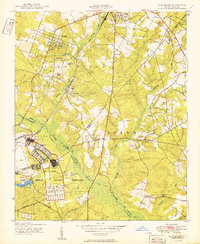 1950 Pine Bluff1950 Print · USGSThe North Carolina Sandhills are captured here at the start of the 1950s, showing a landscape defined by military training and the railroad. Genealogists and local historians can trace family sites like Silver Springs Cemetery, the McFarland Sch, and the wartime infrastructure of Camp Mackall.
 - 1950 Map of Long Bay
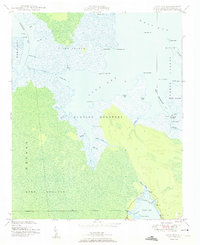 1950 Long Bay1950 Print · USGSThe Carteret County coast at mid-century was a wilderness of tidal marshes and remote island outposts. Researchers can trace historical navigation points like Cedar Island Light, the Isaiah Cem, and early camps such as Velvee Camp.2 unique versions available
 - 1950 Map of South River
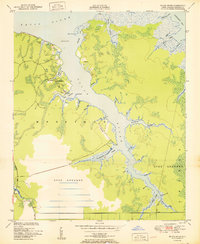 1950 South River1950 Print · USGSCoastal Carteret County at mid-century reveals a landscape of isolated fishing hamlets and vast marshy reaches along the Neuse River. Researchers can locate vanished points like Lukens or the oddly-named Nowhere, and trace water-borne life near South River Light.
 - 1950 Map of Niagara
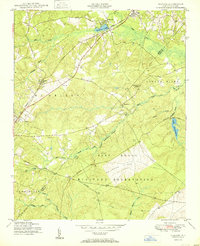 1950 Niagara1950 Print · USGSIn the Sand Hills during the late 1940s, the rural landscapes of Moore and Hoke Counties were defined by rail corridors and expanding military grounds. Researchers can trace family sites like McCrimmons Chapel, the Goins Cem, and the small rail settlements of Niagara and Manly.
 - 1950 Map of Southern Pines
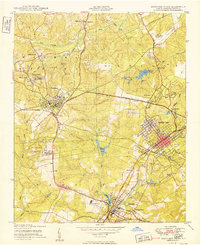 1950 Southern Pines1950 Print · USGSMoore County transitioned from rural timberland to a premier resort hub during the mid-century, as shown in this detailed survey of the Sandhills. Researchers can trace the development of Pinehurst and Southern Pines, locating landmarks like the Village Chapel, The Ark Sch, and Bethesda Church.
 - 1950 Map of North Bay
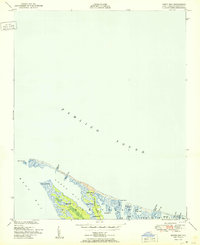 1950 North Bay1950 Print · USGSCoastal Carteret County is mapped here in the late Forties, showing the intricate marshlands and sound-side islands of the Outer Banks region. Genealogists and historians can trace traditional landforms and landings including Sandy Landing, Goodwin Hills, and Hog Island.
 - 1950 Map of Point Of Marsh
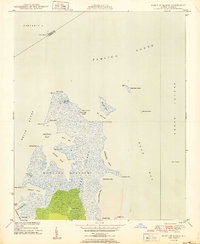 1950 Point Of Marsh1950 Print · USGSThe Outer Banks and Pamlico Sound waters come to life in this mid-century survey of the North Carolina coast. Marine historians and local researchers can trace the intricate shorelines of Piney Island and Hunting Quarters, or locate old navigation aids like Point of Marsh Lt.
 - 1950 Map of Nicholson Creek
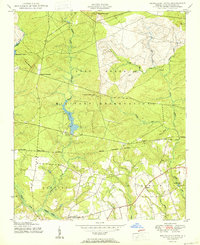 1950 Nicholson Creek1950 Print · USGSHoke County in the early post-war era shows a landscape split between civilian rural life and the expanding military presence of the Sandhills. Genealogists and local historians can trace family-named sites like Johnsons Mill, Campbells Crossroad, and the Abandoned CCC Camp.
 - 1950 Map of Green Island
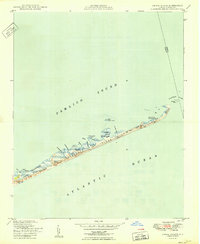 1950 Green Island1950 Print · USGSOcracoke Island and the Outer Banks are captured mid-century, showing a landscape defined by shifting sands and maritime service. Trace the isolation of the Hatteras Inlet Coast Guard Sta and local camps like the Old Green Island Club.3 unique versions available
 - 1950 Map of Shallotte, 1951 Print
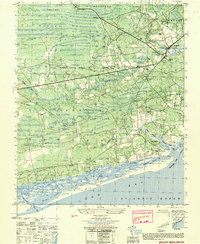 1950 Shallotte1951 Print · USGSThe Brunswick County coast comes alive in this mid-century survey, showcasing a landscape of tidal inlets and rural settlements. Genealogists and historians can trace family landmarks like Mintz Cem, locate the old Prison Camp, and follow the Shallotte River to the Brick Ldg.
 - 1950 Map of Supply, 1951 Print
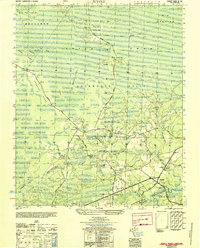 1950 Supply1951 Print · USGSCoastal Brunswick County in the mid-century is defined by its vast swamp networks and isolated rural settlements. Researchers can trace family-named landmarks and community hubs like Prospect Church, the Royal Oak School, and the historic Old Tram Road.
 - 1950 Map of Vandemere, 1952 Print
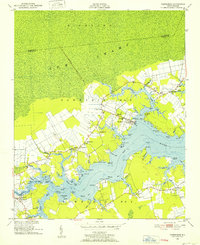 1950 Vandemere1952 Print · USGSCoastal Pamlico County is captured here in the early fifties, showing a landscape shaped by the Bay River and the local timber rail line. Genealogists and historians can locate numerous rural landmarks like Maribel Sch, St Galilee Ch, and the old settlement at Cash Corner.4 unique versions available
Showing maps 1-25 of 274
Top cities of North Carolina
- Charlotte historical maps
- Raleigh historical maps
- Greensboro historical maps
- Durham historical maps
- Winston-Salem historical maps
- Fayetteville historical maps
See more
Top counties of North Carolina
- Mecklenburg County historical maps
- Wake County historical maps
- Guilford County historical maps
- Forsyth County historical maps
- Cumberland County historical maps
- Durham County historical maps
See more
Frequently asked questions
- What are the different types of historical maps available for North Carolina?
- What is the oldest map of North Carolina?
- Where can I purchase historical maps of North Carolina for my home or office?
- Where can I download high-res historical maps of North Carolina?
- Are there historical topographic maps available for North Carolina?
- Is there historical aerial imagery available for North Carolina?
- Where are historical maps of North Carolina sourced from?