1970s Maps of Johnson County, Wyoming
Explore 37 historic maps of Johnson County from the 1970s. These maps offer a rare glimpse into what life looked like during the 1970s — showing old roads, neighborhoods, homes, and landmarks that have changed or disappeared over time.
Whether you're researching your family's past, planning a metal detecting trip, or studying how Johnson County's landscape evolved across the 1970s, these high-resolution maps are a powerful tool for exploring the history of this region.
- Focus on a specific era: All maps on this page are from the 1970s, giving you a focused view of this time period.
- See what’s changed: Compare century-old streets, trails, and buildings to today's modern landscape using overlays and satellite layers.
- Research with precision: Use these maps for genealogy, historical research, land use analysis, or educational projects.
- View, download, or print: Maps are fully viewable online in high resolution, and can be downloaded or printed for your own records.
Start exploring Johnson County's history through authentic maps from the 1970s. This is your window into the past.
Johnson County, WY maps
(37)- 1970 Map of Purdy Reservoir, 1973 Print
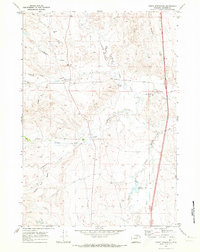 1970 Purdy Reservoir1973 Print · USGSRanching and energy development define this Wyoming landscape during the early seventies. Genealogists can trace family-named landmarks like George Hess Draw or locate the Purdy Reservoir and the historic TA Hills.2 unique versions available
 - 1970 Map of Buffalo, 1973 Print
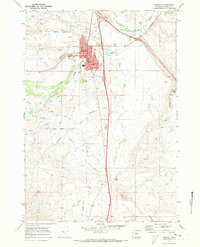 1970 Buffalo1973 Print · USGSBuffalo was a growing hub of Johnson County in the early seventies, centered on the banks of Clear Creek. Researchers can trace the Old Military Reservation Boundary and locate local landmarks like Willow Grove Cemetery and the Fairground.2 unique versions available
 - 1970 Map of Buffalo NE, 1973 Print
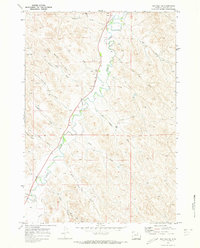 1970 Buffalo NE1973 Print · USGSJohnson County’s landscape in the early seventies reveals a complex system of water management and local settlement. Genealogists and historians can trace the paths of Big Bonanza Ditch and Des Moines Ditch, or locate landmarks like Section School.2 unique versions available
 - 1970 Map of Horse Hill, 1973 Print
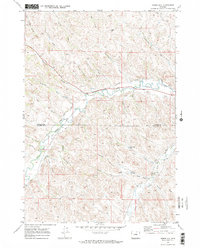 1970 Horse Hill1973 Print · USGSSheridan and Johnson counties are revealed during the early 1970s as a landscape of remote ranching and essential water engineering. Genealogists and historians can trace family-named landmarks and irrigation systems like Horse Hill, Belus No 1 Res, and the Sturdevant Ditch.2 unique versions available
 - 1970 Map of Trabing, 1973 Print
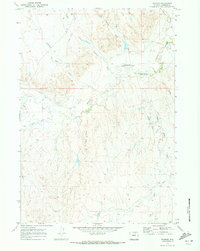 1970 Trabing1973 Print · USGSNorthern Wyoming in the early 1970s reveals a landscape where frontier history meets modern ranching and irrigation. Historians can trace the legendary Bozeman Trail and locate the Crazy Woman Battlefield Historical Marker near the small settlement of Trabing.
 - 1970 Map of Buffalo SE, 1973 Print
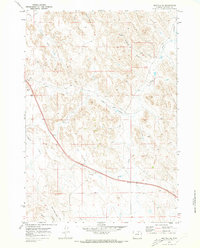 1970 Buffalo SE1973 Print · USGSRanching and resource extraction define this Wyoming landscape in the early 1970s. Trace the rural water-management network through features like the Redman Ditch, Stockrest Well, and the industrial footprint of a Gravel Pit.
 - 1970 Map of Lake De Smet East, 1973 Print
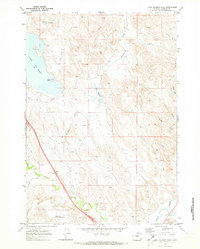 1970 Lake De Smet East1973 Print · USGSNorthern Wyoming in the early seventies centers on the expansive shoreline of Lake De Smet and its vital irrigation networks. Trace the irrigation history of the region through the Last Chance Ditch or the aviation roots of Buffalo Municipal Airport.2 unique versions available
 - 1970 Map of Ucross, 1973 Print
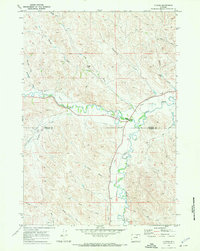 1970 Ucross1973 Print · USGSThe confluence of Clear and Piney Creeks in the 1970s shows a landscape transformed by sophisticated ranching irrigation. Genealogists and local historians can trace the legacy of water rights through the Pratt and Ferris Ditch and the Athorpe Rogers Ditch near the settlement of Ucross.2 unique versions available
 - 1970 Map of T A Ranch, 1973 Print
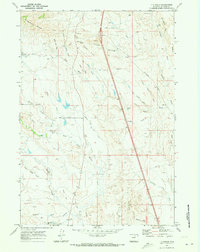 1970 T A Ranch1973 Print · USGSJohnson County ranching and water management are captured here in the early 1970s. Researchers can trace rural life and infrastructure through landmarks like the T A Ranch, the Billy Creek Sch, and the winding Trabing Road.2 unique versions available
 - 1970 Map of Burgess Junction, 1979 Print
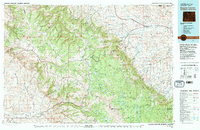 1970 Burgess Junction1979 Print · USGSThe Bighorn Mountains meet the Tongue River valley in the late 1970s, showcasing a landscape of high-altitude forest and foothill settlements. Genealogists and historians can trace the rail towns of Monarch and Ranchester or locate old mountain landmarks like Steamboat Point and Burgess Junction.
 - 1971 Map of Julio Draw, 1975 Print
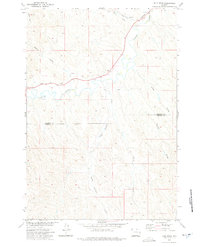 1971 Julio Draw1975 Print · USGSNorthern Wyoming plains and cattle country are captured in the early seventies, centered on the Sheridan and Johnson county line. Trace historical water rights along the Pratt and Ferris Ditch No 1 and the meandering path of Clear Creek.
 - 1972 Map of Mitchell Draw, 1975 Print
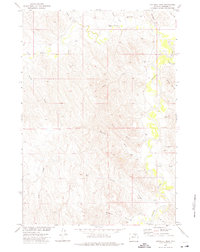 1972 Mitchell Draw1975 Print · USGSThe high plains of Johnson County in the 1970s are defined here by the winding Powder River and a rugged network of ranch-land draws. Genealogists and historians can trace local landmarks like Kinney Divide, Crazy Woman Creek, and several Flowing Wells.
 - 1972 Map of Crazy Woman Ranch, 1975 Print
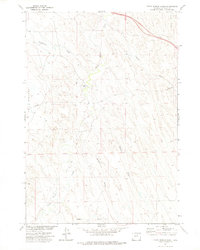 1972 Crazy Woman Ranch1975 Print · USGSJohnson County ranching and drainage patterns come into focus in the early seventies, centered on the historic Crazy Woman Ranch. Researchers can trace the local water sources and land use across The Wallows and the winding Crazy Woman Creek.
 - 1972 Map of Ploessers Draw, 1975 Print
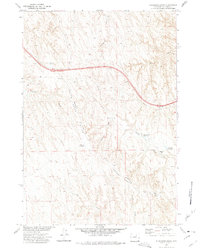 1972 Ploessers Draw1975 Print · USGSJohnson County ranching and water infrastructure are captured here in the early 1970s, showcasing the high plains before further modern development. Trace family land along Schoonover Divide Road or locate the historic Indian Creek Ranch and Alexander Reservoir.
 - 1972 Map of Laskie Draw, 1975 Print
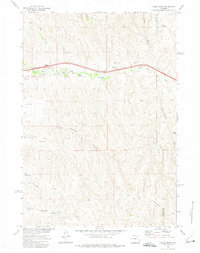 1972 Laskie Draw1975 Print · USGSThe Johnson and Campbell county line in Wyoming's high plains is captured here during the mid-seventies, showing a landscape defined by ranching and resource management. Researchers can trace the path of Dead Horse Creek and locate remote landmarks like Bombsite Reservoir and Vomburg Well.
 - 1972 Map of Pine Gulch, 1975 Print
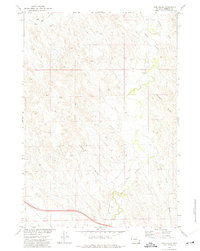 1972 Pine Gulch1975 Print · USGSJohnson County ranching and water rights take center stage in the early seventies, showing the drainage of the Missouri River Basin. Genealogists and local historians can trace family landmarks like the Jack Payne Ranch and the winding course of Crazy Woman Creek.
 - 1972 Map of Bear Draw, 1975 Print
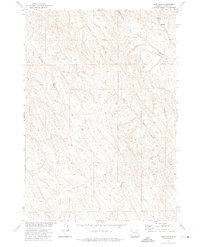 1972 Bear Draw1975 Print · USGSJohnson County ranching land is documented in the early seventies, showing a network of cattle-country drainages and outposts. Researchers can locate family-named sites like Dixon Ranch and trace water sources along Flying E Creek and Coal Gulch.
 - 1972 Map of Lariat, 1975 Print
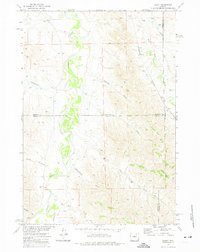 1972 Lariat1975 Print · USGSSheridan County and its neighbors in the early 1970s remained a landscape of cattle ranching and vast drainage systems along the Powder River. Researchers can trace the rail-and-water network near Lariat and find family-named landmarks like Rossnecker Draw and Mickelberry Draw.
 - 1972 Map of Jewell Draw, 1975 Print
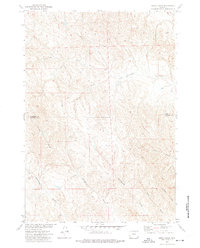 1972 Jewell Draw1975 Print · USGSSheridan and Johnson counties at the start of the 1970s show a landscape shaped by water and ranching. Trace named landmarks like Jewell Draw, The Lake, and Cates Draw across this high plains terrain.
 - 1972 Map of Somerville Flats West, 1975 Print
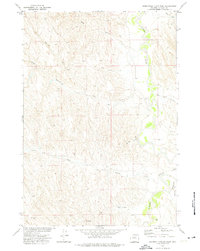 1972 Somerville Flats West1975 Print · USGSJohnson County’s high plains and river bottoms are captured here in the early 1970s during a period of Missouri River Basin development. Researchers can trace the winding Powder River and locate features like the Landing Field, Drill Hole, and Somerville Flats.
 - 1972 Map of Brown Ranch, 1975 Print
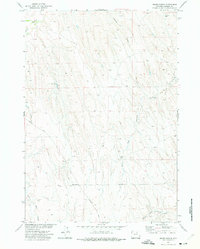 1972 Brown Ranch1975 Print · USGSThe Bozeman Trail's historic route remains clearly visible across this Johnson County landscape as it appeared in the early seventies. Trace the path of 19th-century travelers alongside modern features like Brown Ranch, Four Corners, and Crazy Woman Creek.
 - 1972 Map of Floate Draw, 1975 Print
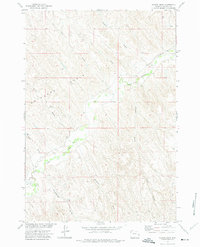 1972 Floate Draw1975 Print · USGSThe high-plains ranching country of Johnson County is captured in the early 1970s, showcasing the intricate drainage systems of the Powder River Basin. Researchers can trace land use through landmarks like Tipperary Ranch, Bass Reservoir, and Crazy Woman Creek.
 - 1972 Map of Negro Butte, 1975 Print
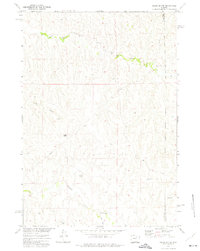 1972 Negro Butte1975 Print · USGSThe borderlands of Johnson and Campbell counties are captured here in the early seventies, detailing a ranching landscape during the Missouri River Basin development. Researchers can trace land use through named features like Beaver Creek Ranch, Negro Butte, and the Plaster Well.
 - 1972 Map of Bowman Flat, 1975 Print
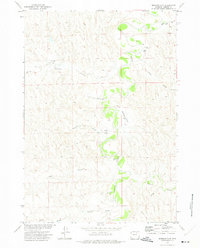 1972 Bowman Flat1975 Print · USGSJohnson County's high plains are defined by the winding Powder River and its wide basins in the early seventies. Researchers can trace the layout of regional infrastructure and aviation landmarks like Bowman Flat and the local Landing Strip.
 - 1972 Map of Arpan Butte, 1975 Print
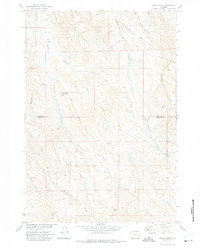 1972 Arpan Butte1975 Print · USGSThe high plains along the Sheridan and Johnson County line come into focus during the early seventies. Geologists and local historians can trace the intricate drainage systems of Thompson Creek and landmarks like Arpan Butte and Bill Yates Reservoir.
Showing maps 1-25 of 37
Top cities of Johnson County
Frequently asked questions
- What are the different types of historical maps available for Johnson County?
- What is the oldest map of Johnson County?
- Where can I purchase historical maps of Johnson County for my home or office?
- Where can I download high-res historical maps of Johnson County?
- Are there historical topographic maps available for Johnson County?
- Is there historical aerial imagery available for Johnson County?
- Where are historical maps of Johnson County sourced from?