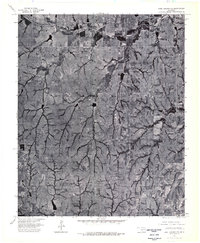
1975 Map of Rush Springs SE
USGS Topo · Published 1976About this map
Chitwood serves as the primary focal point in this 1975 aerial study of the Oklahoma landscape. The orthophotoquad format provides an unvarnished look at the transition between agricultural fields and the intricate network of wooded creek beds that carve through the terrain. Unlike traditional topographic maps, this imagery reveals the exact footprint of farmsteads, the density of timber along drainage paths, and the specific geometry of local ponds and reservoirs that supported the region's ranching and farming operations. The sharp contrast between cleared uplands and the dendritic patterns of the lowlands highlights the land-use priorities of the mid-1970s. For those tracing the evolution of family tracts or property lines, the map offers a rare visual verification of the rural infrastructure as it existed before decades of further modernization.
Find a feature on this map
1 named feature on this map. Tap any name to fly to it.
Don’t see what you’re looking for? This feature index may not catch every label — zoom into the map to look around manually.
Map Details
Editions of this 1975 Rush Springs SE Map
This is the sole edition of this map. No revisions or reprints were ever made.
Other maps of this area
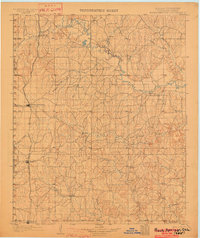
1902 · Rush Springs
USGS Topo · 1:125,000
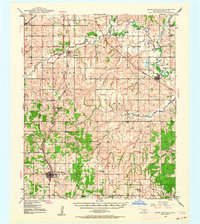
1949 · Rush Springs
USGS Topo · 1:62,500
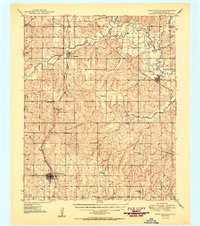
1950 · Rush Springs
USGS Topo · 1:62,500
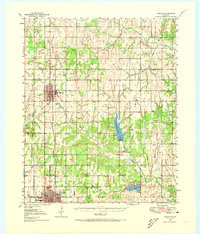
1950 · Marlow
USGS Topo · 1:62,500
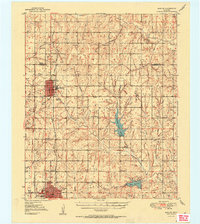
1951 · Marlow
USGS Topo · 1:62,500
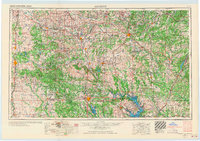
1957 · Ardmore
USGS Topo · 1:250,000
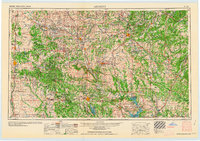
1963 · Ardmore
USGS Topo · 1:250,000
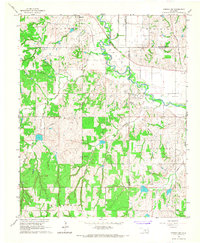
1966 · Lindsay SW
USGS Topo · 1:24,000
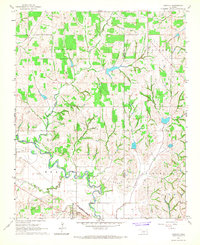
1966 · Bradley
USGS Topo · 1:24,000
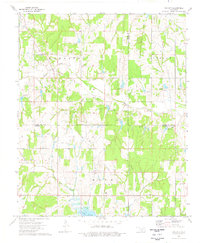
1974 · Cox City
USGS Topo · 1:24,000