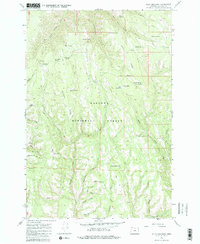
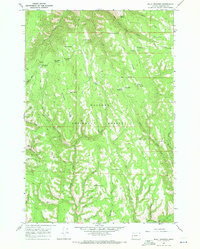
1967 Map of Billy Meadows
USGS Topo · Published 1983About this map
Wallowa National Forest land defines this corner of northeastern Oregon, where the landscape is characterized by high ridges and a dense network of mountain springs. In the late 1960s, this area served as a hub for forest management and seasonal livestock grazing, anchored by the Billy Meadows Guard Station and the Lookout Tower situated on Red Hill. The map reveals a specialized infrastructure for backcountry operations, including the Hollow Log Cow Camp and Hay Pen Camp, alongside water management features like Volstead Reservoir and McCarty Reservoir. A labyrinth of established routes such as the Aspen Spring Trail and the Telephone Trail connect these remote outposts. Numerous named water sources, including Poker Bill Spring, Yew Wood Spring, and Phils Spring, illustrate the vital role of groundwater in sustaining both the local ecosystem and the seasonal camps scattered across Long Ridge and Getchel Ridge.
Find a feature on this map
47 named features on this map. Tap any name to fly to it.
Don’t see what you’re looking for? This feature index may not catch every label — zoom into the map to look around manually.
Map Details
Editions of this 1967 Billy Meadows Map
2 editions found
Other maps of this area
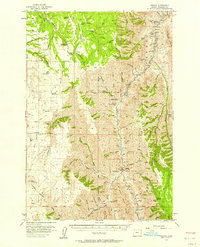
1954 · Imnaha
USGS Topo · 1:62,500
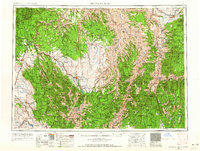
1955 · Grangeville
USGS Topo · 1:250,000
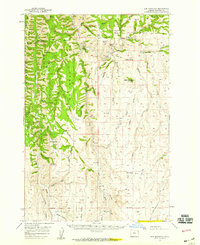
1957 · Elk Mountain
USGS Topo · 1:62,500
1959 · Grangeville
USGS Topo · 1:250,000
1963 · Jim Creek Butte
USGS Topo · 1:24,000
1963 · Poison Point
USGS Topo · 1:24,000
1967 · Table Mountain
USGS Topo · 1:24,000
1967 · Billy Meadows
USGS Topo · 1:24,000
1967 · Paradise
USGS Topo · 1:24,000
1967 · Teepee Butte
USGS Topo · 1:24,000