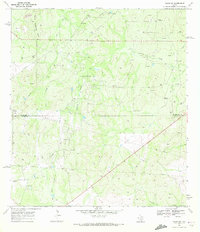
1969 Map of Clegg SW
USGS Topo · Published 1972About this map
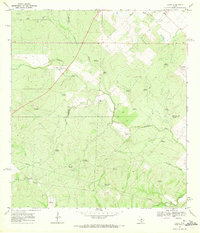
The Campana Oil Field and Labbe Oil Field dominate this 1968 landscape, where an extensive network of pipelines and wells defines the South Texas scrubland. Spanning the boundary of McMullen and Duval Counties, the terrain is marked by seasonal watercourses like Cow Creek and Lagarto Creek that wind between the Devils Waterhole Hills and Waterhole Hills. For genealogists and local historians, the presence of Campos Cem and another unidentified Cem suggests small family or community burial grounds maintained amidst the industrial energy infrastructure. The map also records numerous landmarks vital for ranching and navigation in this arid environment, including the Rincon Windmill, Soda Windmill, and Windmill No 6. These features, alongside named sites like Jug Tank and Jug Well, reflect the dual nature of a region balancing traditional land use with the mid-century oil boom.
Find a feature on this map
19 named features on this map. Tap any name to fly to it.
Don’t see what you’re looking for? This feature index may not catch every label — zoom into the map to look around manually.
Map Details
Editions of this 1969 Clegg SW Map
This is the sole edition of this map. No revisions or reprints were ever made.
Other maps of this area
1920 · Mikeska
USGS Topo · 1:125,000
1937 · Loma Alta
USGS Topo · 1:62,500
1953 · Crystal City
USGS Topo · 1:250,000
1955 · Crystal City
USGS Topo · 1:250,000
1956 · Rosita Ranch
USGS Topo · 1:62,500
1956 · Freer
USGS Topo · 1:62,500
1956 · Laredo
USGS Topo · 1:250,000
1961 · Crystal City
USGS Topo · 1:250,000
1968 · Crystal City
USGS Topo · 1:250,000
1969 · Clegg
USGS Topo · 1:24,000