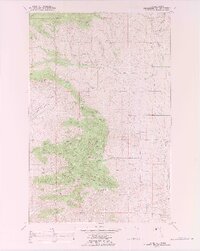
1989 Map of Irvine Hill
USGS Topo · Published 1989About this map
Irvine Flats defines the eastern reach of this landscape, where the plateau meets a complex network of drainage systems on the Flathead Indian Reservation. Recorded in the late 1980s by the Bureau of Indian Affairs and USGS, this survey highlights the infrastructure of the local ranching or timber economy through an extensive system of numbered roads like I-5100 and I-5000 that weave through the high ground. Cultural landmarks are sparse but significant, including the Green Mountain Sch located near the base of Green Mountain. The terrain is characterized by deep ravines such as Gardeau Gulch and Oliver Gulch, which feed into major watercourses like White Earth Creek and Vinson Creek. A single Gravel Pit in the northeast corner near Black Gulch suggests localized resource extraction within the reservation boundaries during this era.
Find a feature on this map
49 named features on this map. Tap any name to fly to it.
Don’t see what you’re looking for? This feature index may not catch every label — zoom into the map to look around manually.
Map Details
Editions of this 1989 Irvine Hill Map
This is the sole edition of this map. No revisions or reprints were ever made.
Other maps of this area
1920 · Flathead Lake
USGS Topo · 1:125,000
1956 · Wallace
USGS Topo · 1:250,000
1960 · Wallace
USGS Topo · 1:250,000
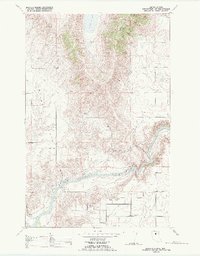
1964 · Buffalo Bridge
USGS Topo · 1:24,000
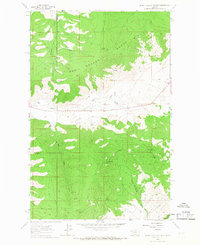
1964 · Irvine Lookout Tower
USGS Topo · 1:24,000
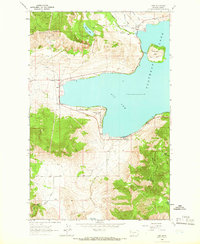
1964 · Elmo
USGS Topo · 1:24,000
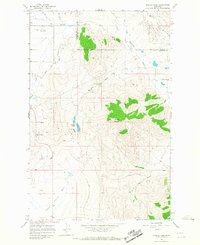
1964 · Markle Pass
USGS Topo · 1:24,000
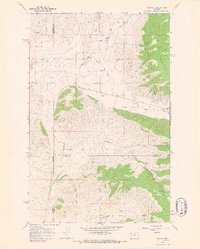
1964 · Niarada
USGS Topo · 1:24,000
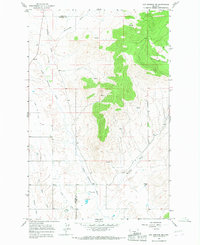
1964 · Hot Springs NE
USGS Topo · 1:24,000
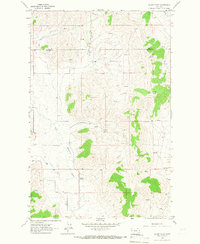
1965 · Oliver Point
USGS Topo · 1:24,000