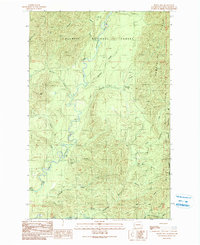
1990 Map of Burnt Hill
USGS Topo · Published 1990About this map
Olympic National Forest land dominates this 1990 provisional study, revealing the complex drainage network of the Humptulips River and its major tributaries. The landscape is defined by the steep relief of Burnt Hill and Cougar Mountain, where the West Fork Humptulips River carves a winding path through the timberlands. Cultural markers are sparse but significant for tracing historical land use, including the Humptulips FS Station and several industrial features such as a Borrow Pit and an old Railroad Grade. These elements reflect a period of intensive forest management and resource extraction in Grays Harbor County. Smaller waterways like Donkey Creek and O'Brien Creek feed into the larger river systems, illustrating the hydrological patterns that have shaped the development of this Pacific Northwest timber region.
Find a feature on this map
28 named features on this map. Tap any name to fly to it.
Don’t see what you’re looking for? This feature index may not catch every label — zoom into the map to look around manually.
Map Details
Editions of this 1990 Burnt Hill Map
This is the sole edition of this map. No revisions or reprints were ever made.
Other maps of this area
1921 · Quinault Lake
USGS Topo · 1:62,500
1921 · Satsop
USGS Topo · 1:62,500
1941 · Mobray
USGS Topo · 1:62,500
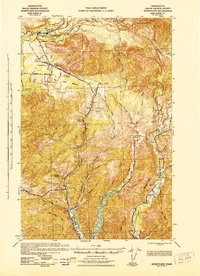
1943 · Humptulips
USGS Topo · 1:62,500
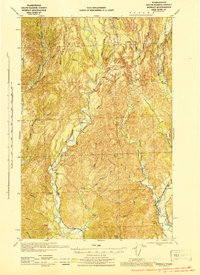
1943 · Mobray
USGS Topo · 1:62,500
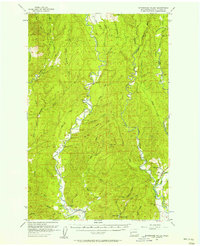
1955 · Wynoochee Valley
USGS Topo · 1:62,500
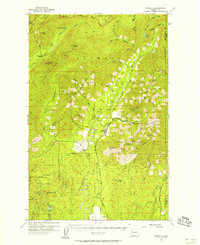
1955 · Grisdale
USGS Topo · 1:62,500
1955 · Humptulips
USGS Topo · 1:62,500
1955 · Quinault Lake
USGS Topo · 1:62,500
1958 · Seattle
USGS Topo · 1:250,000