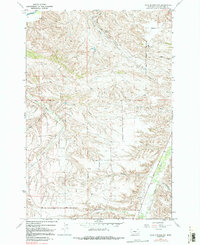
1967 Map of Soda Springs NW
USGS Topo · Published 1991About this map
The Crow Indian Reservation Boundary divides this landscape, marking a transition between the northern high ground and the creek valleys to the south. In the late 1960s, the terrain was defined by a complex network of drainages, including Bitter Creek, Blue Creek, and the winding Pryor Creek along the eastern edge. Local education is centered at the Morin Sch in the southeast, while the Indian Caves State Park protects significant natural features near the reservation line. Recreational and industrial development is evident in the northern reaches, where the Billings Racetrack and a prominent Radio Tower sit above the Yellowstone river valley. The map documents a rural Montana landscape of coulees and ridges, such as Cashen Coulee and Sue Jane Coulee, punctuated by ranch roads and a cross-country Pipeline.
Find a feature on this map
17 named features on this map. Tap any name to fly to it.
Don’t see what you’re looking for? This feature index may not catch every label — zoom into the map to look around manually.
Map Details
Editions of this 1967 Soda Springs NW Map
3 editions found
Other maps of this area
1893 · Huntley
USGS Topo · 1:125,000
1954 · Billings
USGS Topo · 1:250,000
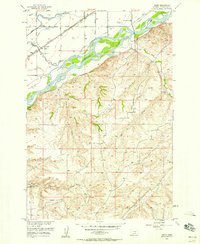
1956 · Yegen
USGS Topo · 1:24,000
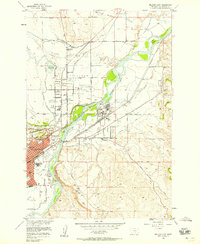
1956 · Billings East
USGS Topo · 1:24,000
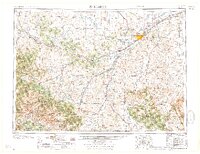
1957 · Billings
USGS Topo · 1:250,000
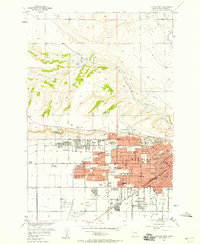
1957 · Billings West
USGS Topo · 1:24,000
1958 · Billings
USGS Topo · 1:250,000
1967 · Soda Springs NW
USGS Topo · 1:24,000
1967 · Soda Springs
USGS Topo · 1:24,000
1967 · Cottonwood Creek
USGS Topo · 1:24,000