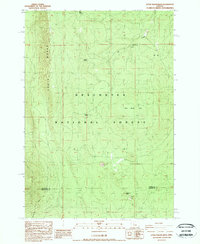
1988 Map of Little Squaw Back
USGS Topo · Published 1988About this map
Green Ridge dominates the western flank of this high-altitude landscape, situated along the border of Jefferson and Deschutes counties. The terrain is defined by volcanic features and water sources critical to the Deschutes National Forest region during the late twentieth century. Notable landmarks include the prominent Little Squaw Back and Garrison Butte, as well as The Gap in the north. The area is marked by a network of isolated water points such as Bear Spring, Whiskey Spring, and Summit Spring, which feed into the drainage of Fly Creek. A Cinder Pit in the southern portion of the sheet provides evidence of local mineral extraction or road-building activity within the forest's volcanic topography. This provisional survey captures the transition from the high ridge down toward the creek beds, documenting the forest's primitive road network and natural landmarks.
Find a feature on this map
13 named features on this map. Tap any name to fly to it.
Don’t see what you’re looking for? This feature index may not catch every label — zoom into the map to look around manually.
Map Details
Editions of this 1988 Little Squaw Back Map
This is the sole edition of this map. No revisions or reprints were ever made.
Other maps of this area
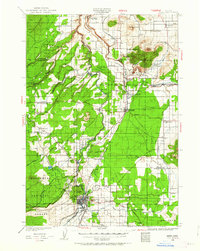
1926 · Bend
USGS Topo · 1:125,000
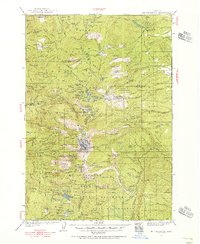
1927 · Mt. Jefferson
USGS Topo · 1:125,000
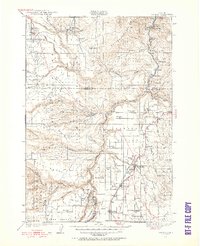
1928 · Madras
USGS Topo · 1:125,000
1929 · Bend
USGS Topo · 1:125,000
1929 · Three Sisters
USGS Topo · 1:125,000
1930 · Mt. Jefferson
USGS Topo · 1:125,000
1931 · Madras
USGS Topo · 1:125,000
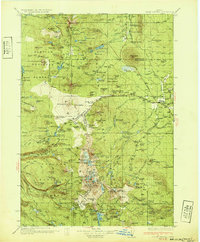
1932 · Three Sisters
USGS Topo · 1:125,000
1955 · Bend
USGS Topo · 1:250,000
1957 · Bend
USGS Topo · 1:250,000