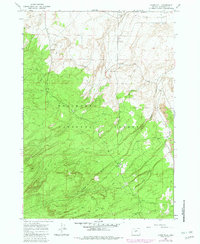
1967 Map of Evans Well
USGS Topo · Published 1981About this map
Deschutes National Forest dominates this Central Oregon landscape, characterized by the transition between wooded high country and the arid Millican Valley. This 1967 survey shows a region defined by water scarcity and land management, where remote outposts like Evans Well and Smith Well provided essential resources for livestock and travelers. The presence of Camp 1 (Site) and Camp 2 (Site) suggests earlier human occupancy, likely related to logging or forest service operations. Geological features such as the Tepee Draw and sections of Lava emphasize the volcanic history of the High Desert. Transportation is limited to a network of Jeep Trails, underscoring the area's isolation during the mid-20th century. Local landmarks like the Corral and various Borrow Pits provide evidence of grazing and road maintenance within the forest boundaries.
Find a feature on this map
15 named features on this map. Tap any name to fly to it.
Don’t see what you’re looking for? This feature index may not catch every label — zoom into the map to look around manually.
Map Details
Editions of this 1967 Evans Well Map
2 editions found
Other maps of this area
1931 · Newberry Crater
USGS Topo · 1:125,000
1935 · Newberry Crater
USGS Topo · 1:125,000
1955 · Crescent
USGS Topo · 1:250,000
1957 · Crescent
USGS Topo · 1:250,000
1958 · Crescent
USGS Topo · 1:250,000
1967 · Horse Ridge
USGS Topo · 1:24,000
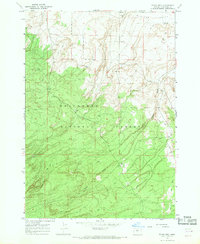
1967 · Evans Well
USGS Topo · 1:24,000
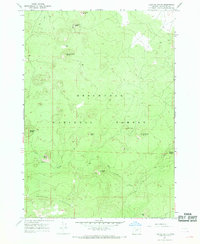
1967 · Fuzztail Butte
USGS Topo · 1:24,000
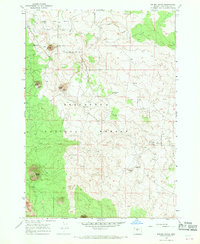
1967 · Kelsey Butte
USGS Topo · 1:24,000
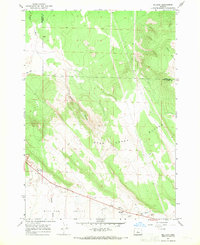
1967 · Millican
USGS Topo · 1:24,000