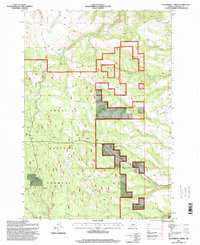
1995 Map of Sugarbowl Creek
USGS Topo · Published 1998About this map
Gilman Ranch and the surrounding watersheds of the Umatilla National Forest dominate this mid-1990s U.S. Forest Service revision. The landscape is defined by its complex hydrology, with numerous named water sources such as Gulliford Spring, Wolf Spring, and Sturdevant Spring feeding into drainage systems like Sugarbowl Creek and Butter Creek. Significant topographical features like Sugarbowl Ridge and the unusually named The Big Pot provide a framework for the rugged terrain, while Battle Mountain rises in the northeast. Transportation through this remote section of the Blue Mountains is anchored by the Blue Mountain Scenic Byway, which passes near a Forest Visitor Information Board. The presence of several Drill Holes and a Gravel Pit suggests localized resource exploration and infrastructure maintenance within the national forest boundaries during this era.
Find a feature on this map
32 named features on this map. Tap any name to fly to it.
Don’t see what you’re looking for? This feature index may not catch every label — zoom into the map to look around manually.
Map Details
Editions of this 1995 Sugarbowl Creek Map
This is the sole edition of this map. No revisions or reprints were ever made.
Other maps of this area
1953 · Pendleton
USGS Topo · 1:250,000
1956 · Pendleton
USGS Topo · 1:250,000
1967 · Bridge Creek
USGS Topo · 1:24,000
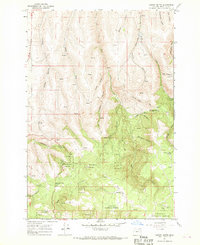
1967 · Carney Butte
USGS Topo · 1:24,000
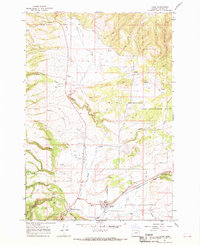
1967 · Ukiah
USGS Topo · 1:24,000
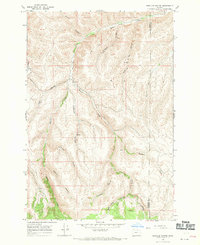
1968 · Hoodlum Canyon
USGS Topo · 1:24,000
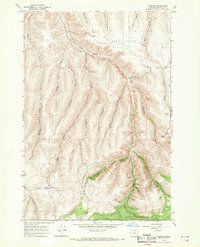
1968 · Gurdane
USGS Topo · 1:24,000
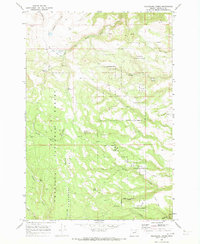
1969 · Sugarbowl Creek
USGS Topo · 1:24,000
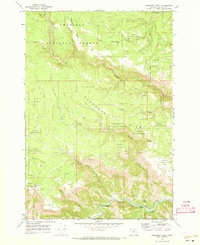
1969 · Deerhorn Creek
USGS Topo · 1:24,000
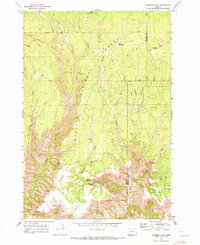
1969 · Thompson Flat
USGS Topo · 1:24,000