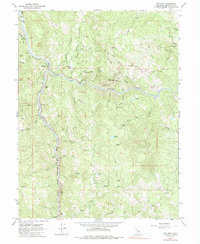
1967 Map of Dos Rios
USGS Topo · Published 1985About this map
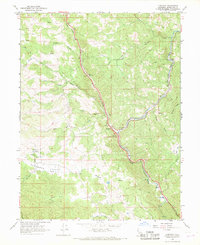
The confluence of the Eel River and its Middle Fork anchors this remote Mendocino County landscape during the late 1960s. The small settlement of Dos Rios serves as the primary human landmark, situated where the Northwestern Pacific railroad tracks follow the river's winding canyon. This era reveals a region defined by its rugged topography and isolated camps, such as Deer Lodge and Hunters Camp, tucked away among the ridges. High-elevation features like Inspiration Point and Big Chemise Knob look down upon a network of drainage basins including Poonkinny Creek and Coal Creek. The map documents early industrial and water management footprints, from a Gaging Station on the river to scattered mines and the notable Poonkinny Road, providing a clear record of the area's transition between wilderness and early resource extraction.
Find a feature on this map
48 named features on this map. Tap any name to fly to it.
Don’t see what you’re looking for? This feature index may not catch every label — zoom into the map to look around manually.
Map Details
Editions of this 1967 Dos Rios Map
4 editions found
Other maps of this area
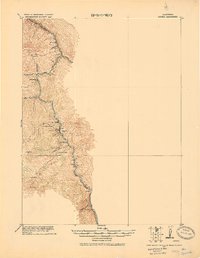
1920 · Covelo
USGS Topo · 1:62,500
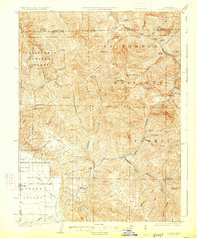
1926 · Covelo
USGS Topo · 1:62,500
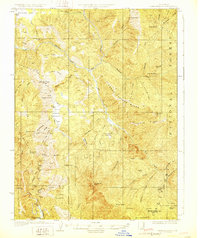
1929 · Eden Valley
USGS Topo · 1:62,500
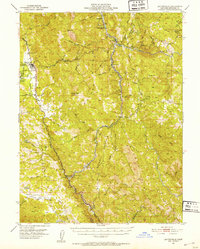
1951 · Laytonville
USGS Topo · 1:62,500
1952 · Spyrock
USGS Topo · 1:62,500
1952 · Eden Valley
USGS Topo · 1:62,500
1952 · Covelo
USGS Topo · 1:62,500
1957 · Ukiah
USGS Topo · 1:250,000
1960 · Ukiah
USGS Topo · 1:250,000
1966 · Longvale
USGS Topo · 1:24,000