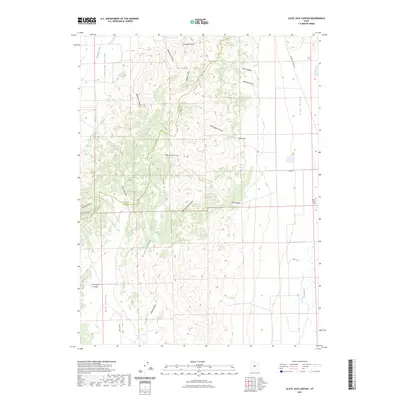
2023 Map of Slate Jack Canyon
USGS Topo · Published 2023About this map
Long Ridge and Middle Ridge dominate this section of the central Utah landscape, marking the topographic transition between Goshen Valley to the northwest and Juab Valley to the east. The terrain is defined by a complex network of drainages, including Crooked Canyon, Goosenest Canyon, and the prominent Slate Jack Canyon. These natural corridors reveal a history of water access in an arid climate, anchored by reliable points like Slate Jack Spring, Cottonwood Spring, and Lunt-Lattimer Spring.
Find a feature on this map
29 named features on this map. Tap any name to fly to it.
Don’t see what you’re looking for? This feature index may not catch every label — zoom into the map to look around manually.
Map Details
Editions of this 2023 Slate Jack Canyon Map
This is the sole edition of this map. No revisions or reprints were ever made.
Other maps of this area
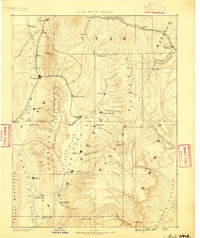
1885 · Manti
USGS Topo · 1:250,000
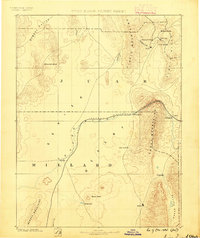
1885 · Sevier Desert
USGS Topo · 1:250,000
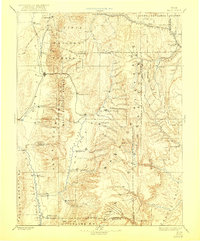
1895 · Manti
USGS Topo · 1:250,000
1949 · Eureka
USGS Topo · 1:24,000
1951 · Santaquin
USGS Topo · 1:62,500
1951 · Nephi
USGS Topo · 1:62,500
1953 · Delta
USGS Topo · 1:250,000
1954 · Tintic Mountain
USGS Topo · 1:24,000
1954 · Eureka
USGS Topo · 1:24,000
1956 · Price
USGS Topo · 1:250,000