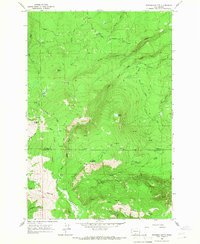
1965 Map of Stagman Butte
USGS Topo · Published 1967About this map
The Yakima Indian Reservation landscape is defined by the sharp high-elevation relief of the eastern Cascades, where the Treaty Boundary and Reservation Boundary delineate the intersection of Yakima and Klickitat counties. This mid-1960s survey documents a network of primitive transportation and forestry infrastructure, most notably the Satus Ranger Station Road and various jeep trails that provided access to fire lookouts and remote camps. Landmark peaks like Stagman Butte, Smith Butte, and the prominent Castle Rock rise above a complex drainage system fed by numerous springs, which nourish Logy Creek and its various forks. The presence of the Satus Ranger Station (Site) and Telephone Camp underscores the area's history as a managed wilderness, while the specialized designation of lakebeds near the reservation line indicates seasonal hydrological shifts in this high-altitude terrain.
Find a feature on this map
24 named features on this map. Tap any name to fly to it.
Don’t see what you’re looking for? This feature index may not catch every label — zoom into the map to look around manually.
Map Details
Editions of this 1965 Stagman Butte Map
This is the sole edition of this map. No revisions or reprints were ever made.
Other maps of this area
1937 · White Swan
USGS Topo · 1:125,000
1950 · Yakima
USGS Topo · 1:250,000
1953 · The Dalles
USGS Topo · 1:250,000
1956 · The Dalles
USGS Topo · 1:250,000
1957 · The Dalles
USGS Topo · 1:250,000
1957 · Goldendale
USGS Topo · 1:62,500
1957 · Satus Pass
USGS Topo · 1:62,500
1958 · Yakima
USGS Topo · 1:250,000
1961 · Yakima
USGS Topo · 1:250,000
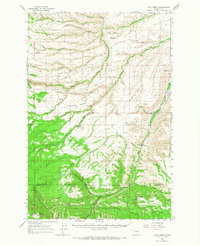
1965 · Logy Creek
USGS Topo · 1:62,500