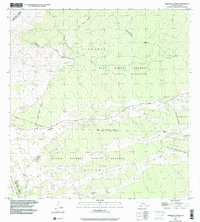
1994 Map of Waikoloa Ponds
USGS Topo · Published 2001About this map
Lava Flow of 1855 and other nineteenth-century eruptions dominate this landscape on the windward slopes of the Big Island. The map reveals the dramatic intersection of volcanic history and hydrology, where the Wailuku River and Waipahoehoe Gulch carve through prehistoric and historic basalt fields. To the south, the Upper Waiakea Forest Reserve and the specialized Upper Waiakea Bog Sanctuary indicate a transition into high-elevation wetlands, a sharp contrast to the stark lava fields. This area serves as a critical water catchment, noted by the Hilo Forest Reserve Hilo Closed Watershed and scattered Gaging Stations. Evidence of early transportation and land division is found in the path of the Saddle Road and designated areas like Piihonua and Kaumana, which mark the upper reaches of Hilo's traditional land districts.
Find a feature on this map
24 named features on this map. Tap any name to fly to it.
Don’t see what you’re looking for? This feature index may not catch every label — zoom into the map to look around manually.
Map Details
Editions of this 1994 Waikoloa Ponds Map
This is the sole edition of this map. No revisions or reprints were ever made.
Other maps of this area
1915 · Honomu
USGS Topo · 1:62,500
1917 · Hilo
USGS Topo · 1:62,500
1930 · Humuula
USGS Topo · 1:62,500
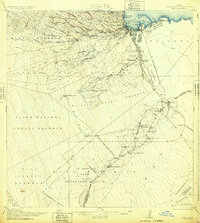
1932 · Hilo
USGS Topo · 1:62,500
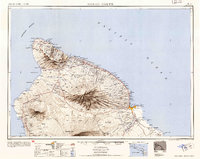
1954 · Hawaii North
USGS Topo · 1:250,000
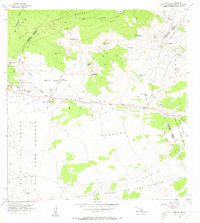
1956 · Puu Oo
USGS Topo · 1:24,000
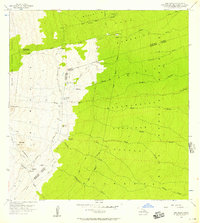
1956 · Pua Akala
USGS Topo · 1:24,000
1956 · Upper Piihonua
USGS Topo · 1:24,000
1956 · Puu Ulaula
USGS Topo · 1:24,000
1956 · Kulani
USGS Topo · 1:24,000