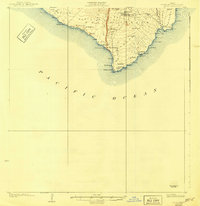
1924 Map of Kalae
USGS Topo · Published 1943About this map
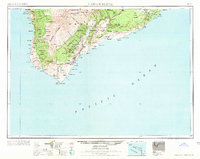
The southern tip of the Big Island, surveyed shortly after the turn of the century by Bishop Moorhead, is dominated by the massive paths of the Lava Flow of 1887 and Lava Flow of 1868. These volcanic events define the terrain of the Kahuku and Pakinui areas, creating a stark landscape where the earth's recent movements meet the Pacific Ocean. This coastal edge is marked by cultural and geological sites, including Ka Heiau o Molilele and Ka Heiau o Kalalea, indicating the spiritual and historical significance of the point. Around the Kamaoa Homesteads and along the Waiohinu Road, the land transitions into a pattern of early 20th-century settlement. Unique geological features like the water-filled Lua o Palahemo and the cinder cone at Puu o Mahana highlight the volatile nature of this Hawaiian coastline during the territorial era.
Find a feature on this map
55 named features on this map. Tap any name to fly to it.
Don’t see what you’re looking for? This feature index may not catch every label — zoom into the map to look around manually.
Map Details
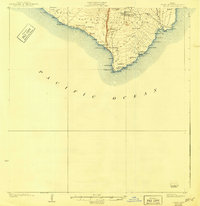
Editions of this 1924 Kalae Map
3 editions found
Other maps of this area
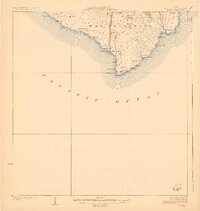
1924 · Kalae
USGS Topo · 1:62,500
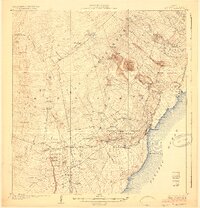
1924 · Honuapo
USGS Topo · 1:62,500
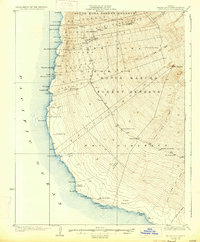
1928 · Hoopuloa
USGS Topo · 1:62,500
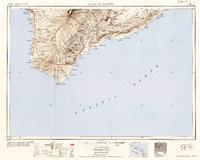
1954 · Hawaii South
USGS Topo · 1:250,000
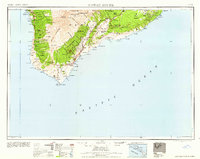
1959 · Hawaii South
USGS Topo · 1:250,000
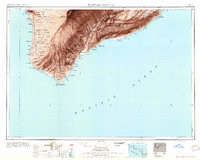
1961 · Hawaii South
USGS Topo · 1:250,000
1962 · Hawaii South
USGS Topo · 1:250,000
1962 · Puu Hou
USGS Topo · 1:24,000
1962 · Kahuku Ranch
USGS Topo · 1:24,000
1962 · Pohue Bay
USGS Topo · 1:24,000