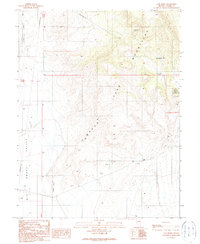
1989 Map of Cape Horn
USGS Topo · Published 1990About this map
The Simpson Park Mountains dominate this central Nevada landscape, rising sharply from the eastern edge of the Big Smoky Valley. This 1989 provisional survey reveals a high-desert environment where water sources like Palomino Spring and Ackerman Spring were critical waypoints for local movement. The presence of a Hickison Petroglyph Recreation Site and specific Petroglyphs markers highlights the deep archaeological significance of the area, preserving evidence of early indigenous inhabitants near the canyon passes. At the southern end of the range, the distinctive Cape Horn landform overlooks a series of Borrow Pit and Gravel Pit extractions, reflecting the mid-to-late 20th-century infrastructure development that accompanied the high-voltage transmission line crossing the northern terrain.
Find a feature on this map
17 named features on this map. Tap any name to fly to it.
Don’t see what you’re looking for? This feature index may not catch every label — zoom into the map to look around manually.
Map Details
Editions of this 1989 Cape Horn Map
This is the sole edition of this map. No revisions or reprints were ever made.
Other maps of this area
1926 · Roberts Mountains
USGS Topo · 1:250,000
1929 · Roberts Mountains
USGS Topo · 1:250,000
1955 · Millett
USGS Topo · 1:250,000
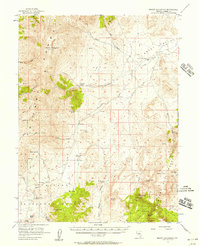
1956 · Mount Callaghan
USGS Topo · 1:62,500
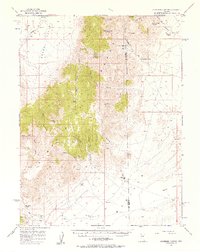
1956 · Ackerman Canyon
USGS Topo · 1:62,500
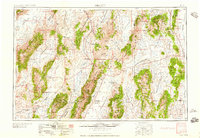
1959 · Millett
USGS Topo · 1:250,000
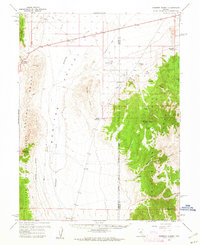
1960 · Hickison Summit
USGS Topo · 1:62,500
1960 · Spencer Hot Springs
USGS Topo · 1:62,500
1978 · Summit Mountain
USGS Topo · 1:100,000
1979 · Simpson Park Mtns
USGS Topo · 1:100,000