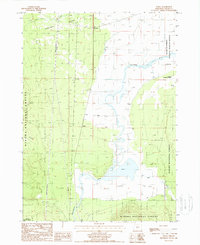
1988 Map of Fuego
USGS Topo · Published 1990About this map
The Williamson River snakes through this high-altitude landscape of south-central Oregon, defining a corridor of biological and economic importance. In the northern reaches, the arid Antelope Desert gives way to the protected wetlands of the Klamath Forest National Wildlife Refuge, while the southern portion is dominated by the dense timberlands of the Winema National Forest. Small stopping points and rail-associated names like Kirk and Chinchalo appear along the transport lines, reflecting the region's history as a timber and ranching hub. Evidence of early infrastructure is visible in the Old RR Gr and the Wooden Pole Trans Line Pipeline that cuts across the terrain, illustrating the technical efforts required to navigate and harness this remote volcanic plateau. Natural water sources like Sand Creek and the Soloman Flat area provide essential breaks in the surrounding forest and desert scrub.
Find a feature on this map
14 named features on this map. Tap any name to fly to it.
Don’t see what you’re looking for? This feature index may not catch every label — zoom into the map to look around manually.
Map Details
Editions of this 1988 Fuego Map
This is the sole edition of this map. No revisions or reprints were ever made.
Other maps of this area
1889 · Klamath
USGS Topo · 1:250,000
1894 · Klamath
USGS Topo · 1:250,000
1955 · Klamath Falls
USGS Topo · 1:250,000
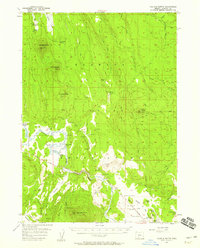
1956 · Calimus Butte
USGS Topo · 1:62,500
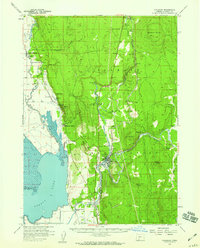
1957 · Chiloquin
USGS Topo · 1:62,500
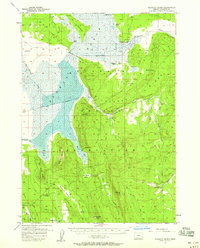
1957 · Klamath Marsh
USGS Topo · 1:62,500
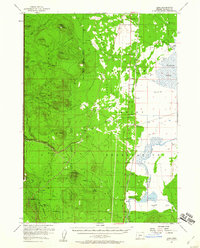
1957 · Lenz
USGS Topo · 1:62,500
1958 · Klamath Falls
USGS Topo · 1:250,000
1980 · Williamson River
USGS Topo · 1:100,000
1985 · Pothole Butte
USGS Topo · 1:24,000